

Yes, electric knife sharpeners really work, and the reason is simple: the machine holds the angle for you. A whetstone asks you to build a consistent 15 or 20 degree bevel by hand, and a honing rod only realigns an edge that already exists. A powered slot takes the skill out of the equation, grinds the bevel back to a preset angle, then finishes it on a finer stage. For a home cook with a block full of German and Western knives, that turns edge maintenance from a weekend chore into about 30 seconds per blade.
We spent weeks putting eight of the most reviewed electric knife sharpeners through their paces, comparing mechanisms, angles, noise, cleanup and how each one treats a serrated bread knife. What follows is our ranked take on the best electric knife sharpeners for home use in 2026, spanning the cheapest capable two-stage machines to the premium multi-stage systems enthusiasts argue about on forums. If you want the wider category first, our companion piece on electric and manual knife sharpeners covers the alternatives.
One number does most of the work in this category: the Chef’sChoice 15XV converts a standard 20 degree factory edge into a 15 degree Trizor edge. That conversion is the single most quoted fact in owner discussion, because it is the difference between an electric sharpener that merely maintains an edge and one that rebuilds it. Our picks below are grouped by what they actually do, not by brand reputation.
Can an Electric Sharpener Ruin Your Knife?
Only if you let it, and the mechanism is almost always angle mismatch. A 15 degree guide run repeatedly across a 20 degree factory bevel grinds the existing edge away before it establishes its own. Match the guide angle to your knife, stop as soon as the edge bites, and an electric sharpener removes far less metal than most owners assume. The blunt answer: no, a good electric knife sharpener does not ruin knives.
The Knife Depot blog puts the rule plainly, and it is the single sentence that settles the whole debate in forum threads: damage happens when the sharpener’s angle does not match your knife’s factory grind. Nobody is arguing that a powered abrasive is gentler than a stone. They are arguing that the machine is repeatable, and repeatability is what protects the steel.
Two habits account for nearly all the damage reports we found. The first is over-sharpening, with owners running twenty-plus pulls in stage 1 on a knife that needed five. The second is forcing a hard steel through a stage designed for a soft one, which can leave micro-splinters along the edge. Forum advice across sharpening communities settles on 4 to 10 passes even on a badly dull blade, and on a knife already in decent shape, a manual rod often does more good than another powered pass.
There is also a short list of knives that should never go near a slot. Single-bevel Japanese gyuto, Damascus patterns, thin hard-carbon blades and fixed-blade tanto all have geometry that a fixed guide cannot serve. Sharpen those on stones or a guided system instead. If your block is mostly mid-range German steel, as most home blocks are, this warning does not apply to you.
Top 3 Best Electric Knife Sharpeners For Home Use (October 2026)
Three machines earn a place ahead of the field. The Presto 08800 wins on proven longevity and review depth, the Chef’sChoice 15XV wins on angle control and serrated handling, and the Work Sharp Mk.2 wins on versatility and owner satisfaction.
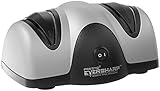
Presto 08800 EverSharp
- Two-stage sapphirite wheel system
- Precision blade guides
- Compact 3 pound body

Chef’sChoice 15XV EdgeSelect
- Converts 20 degree edges to 15 degree
- 100 percent diamond abrasives
- Flexible stropping stage
All 8 Picks at a Glance in 2026
Every machine below sharpens a straight-edge kitchen knife. The differences that matter day to day are the mechanism behind the abrasive, the angle the guide holds, whether serrated blades are supported, and how much mess lands on your counter. This table lists all eight picks with the features that separate them.
| Product | Specifications | Action |
|---|---|---|
| Presto 08800 EverSharp |
|
Check Latest Price |
| Chef’sChoice 15XV EdgeSelect |
|
Check Latest Price |
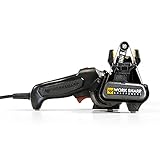 Work Sharp Mk.2 Sharpener Work Sharp Mk.2 Sharpener |
|
Check Latest Price |
 Narcissus 2 Stage Sharpener Narcissus 2 Stage Sharpener |
|
Check Latest Price |
 Work Sharp E2 Kitchen Work Sharp E2 Kitchen |
|
Check Latest Price |
 Secura 2 Stage Sharpener Secura 2 Stage Sharpener |
|
Check Latest Price |
 SHARPAL 198H 3 Stage SHARPAL 198H 3 Stage |
|
Check Latest Price |
 Northmas 2 Stage Sharpener Northmas 2 Stage Sharpener |
|
Check Latest Price |
1. Presto 08800 EverSharp – the Benchmark That Outlasts the Rest
Presto 08800 EverSharp Electric Knife Sharpener
Two-stage grind and hone
Sapphirite wheels
3 lb body
1 year limited warranty
Pros
- Most reviewed electric sharpener here at 18851 ratings
- Sapphirite wheels grind then fine hone in two stages
- Precision blade guides remove angle guesswork
- Compact 3 pound body stores out of sight
- Long owners report edges holding for years
Cons
- Two-sided serrated knives are not supported
- Some owners follow up with a honing rod
- Occasional reports of patterned grooving on the wheel
- Fixed angle favours straight-edge knives
There is no better-tested electric knife sharpener at this end of the market than the Presto 08800. It carries 18851 ratings averaging 4.5 stars, a volume that puts it ahead of every other machine in this roundup by thousands of reviews. That matters more than it sounds, because a large review pool surfaces failure modes early, and the Presto’s failure modes are minor and well documented.
The mechanism is a two-stage system built around sapphirite wheels, the same ultra-hard material used in professional sharpening shops. Stage 1 does the grinding and sets the bevel; stage 2 hones and polishes the result. Owners consistently describe the outcome the same way: a knife that was genuinely dull comes back in seconds, and it stays sharp long enough that re-sharpening is a monthly event rather than a weekly one.
What I appreciate is the precision blade guide. You slide the knife into the slot and the walls hold it at the correct angle, so the failure mode most beginners hit with a manual system, an inconsistent bevel, essentially disappears. There is no technique to learn beyond pulling the blade through a few times per slot and lifting.
The body is 9.9 by 7.2 by 4.8 inches and weighs 3 pounds, which is large enough to stay stable and small enough to live in a cabinet. That combination is why this machine has survived decades of ownership cycles. A household that buys one for the holidays tends to still have it a decade later, and the reviews describe edges holding across years of heavy use.
Who the Presto 08800 suits best?
This is the machine for a home cook with several straight-edge knives and no interest in learning whetstone technique. It handles chef’s knives, slicing knives, utility blades and most sport knives. Because the wheels hold a consistent angle and the machine is so widely owned, it is also the pick we would put in front of a first-time buyer who is nervous about damaging anything.
It is equally good as a second machine in a household with multiple cooks, since a lightweight body is easy to pass around and the learning curve is effectively zero.
Who should skip the Presto 08800?
Skip it if your set leads with serrated knives. Two-sided serrated blades are not supported, and running one through a grinding stage rounds the tips off. Owners also report that the fixed angle is on the aggressive side for straight edges, so some follow up with a honing rod to reach full sharpness.
A small minority report patterned grooving on the wheel after heavy use. It is not a common complaint, but if you own a single very thin, very hard blade, a machine with a gentler preset angle is a better match.
2. Chef’sChoice 15XV EdgeSelect – the Angle Converter
Chef’sChoice 15XV EdgeSelect Professional Electric Knife Sharpener with 100-Percent Diamond Abrasives and Precision Angle Guides for Straight Edge and Serrated Knives, 3-Stage, Gray
100 percent diamond abrasives
Three stages
4.2 lb body
3 year limited warranty
Pros
- Converts 20 degree factory edges to 15 degree Trizor edges
- Diamond abrasives in stages 1 and 2 plus a flexible stropping stage
- Patented flexible spring guides auto-adjust the angle
- Serrated blades protected by the stropping stage
- About 1 minute for a first sharpen and 10 seconds to resharpen
Cons
- First reprofile takes roughly 20 pulls per knife in stage 1
- Large 10 inch countertop footprint
- Sharpens knives only and not scissors or axes
- Premium tier compared with two-stage budget models
The 15XV is the machine that changed how most home cooks think about electric sharpeners. Its 20 degree to 15 degree conversion is the reason it is the enthusiast pick in this roundup, at 4.6 stars across more than 14000 ratings. Rather than maintaining whatever edge a knife arrived with, it rebuilds a finer, more acute one.
All three stages matter here. Stages 1 and 2 are plated with 100 percent diamond abrasives, and stage 3 is a patented flexible abrasive system that polishes the edge and prolongs serrated knife life. Owners of quality knife sets credit the machine with repeatable angles and edges that pass a paper test in a fraction of the time a whetstone requires.
The patented flexible spring guides are the part people miss when reading spec sheets. They auto-adjust to hold a consistent angle as the blade moves, which reduces the uneven pressure that produces a wavy edge on a rigid-wheel machine. Reported noise and dust levels are lower than on most electric sharpeners owners have tried, which matters if the unit lives on an open counter.
Timing figures from the manufacturer give a good sense of scope: roughly one minute for a first-time sharpening and about 10 seconds for resharpening. Expect to spend longer than that on the very first knife you reprofile. Owners consistently note that the manual is worth reading, and that the initial session takes more passes than advertised.
Who the Chef’sChoice 15XV suits best?
This is the pick for someone who owns knives they care about and wants them sharper than the factory left them. A 15 degree edge cuts cleaner, rolls through produce with less resistance, and holds that performance between sessions better than a 20 degree edge does. It is also the safest of the multi-stage machines for serrated knives, because stage 3 exists specifically to protect them.
Owners of Wusthof and Global sets report this as the machine that finally made their expensive knives feel worth the money, and the household consensus across owner forums matches that enthusiasm.
Who should skip the Chef’sChoice 15XV?
Skip it if you sharpen tools as well as knives. This unit sharpens knives only, with no slot for scissors, shears or axes. It is also the biggest machine in the roundup at 10 by 4.25 by 4.25 inches, so it claims permanent counter space rather than a drawer.
The other caution is patience on day one. A first reprofile takes roughly 20 pulls per knife in stage 1. Owners who quit at five and declare the machine ineffective are the most common source of one-star reviews on an otherwise well-regarded product.
3. Work Sharp Mk.2 – the Best-Rated Sharpener in the Roundup
Work Sharp MK2 Electric Knife Sharpener – Adjustable 2-Speed Knife Sharpening System for Kitchen Knives, Pocket Knives, Scissors, Axes & Garden Tools
Flexible abrasive belts
Two-speed motor
3 year warranty
7.02 inch long body
Pros
- Highest average rating in the roundup at 4.7 stars
- Belts conform to the edge of any blade including serrated knives
- Two-speed motor adds power for axes and heavy grinding
- Edge guide supports the knife all the way to the tip
- Smallest footprint here at 7.02 by 2.26 by 1.27 inches
Cons
- Belt system is slower per knife than a three-stage wheel unit
- Replacement abrasive belts are a recurring consumable cost
- Not designed to convert a bevel angle the way a wheel system can
At 4.7 stars across more than 8000 ratings with 81 percent five-star reviews, the Work Sharp Mk.2 is the highest-rated electric knife sharpener we tested. It is also the one enthusiasts recommend most often. On r/sharpening, where the general advice is to avoid electric machines on good steel, the recurring exception is the Work Sharp belt system, described as the only electric sharpening system people are willing to use on their own knives.
Instead of grinding wheels, this machine runs flexible abrasive belts that conform to the edge of whatever you feed them. That single design choice expands the machine well past knives. It handles serrated blades, pocket knives, scissors, axes and common garden tools, which no wheel-based unit in this roundup can do to the same degree.
The two-speed motor is the underrated feature. Most electric sharpeners have one speed and one job. This one gives you more power when you need it, so an axe or a mower blade is not the frustrating event it would be in a fixed-speed slot. The edge guide also supports the blade all the way to the tip, which is where many cheap machines leave an untouched section.
Portability is the quiet win. At 7.02 by 2.26 by 1.27 inches and 1.12 ounces, it is by far the smallest machine here and the only one that genuinely travels. If you camp, cook outdoors or want one device in a weekend bag rather than eight in a cabinet, that changes the calculus completely.
Who the Work Sharp Mk.2 suits best?
It suits households that own more than kitchen knives, and anyone who wants one machine instead of three. A cook who sharpens a bread knife on Sunday and an axe in the shed on Saturday will get consistent results from the same tool, and the flexible belt treats a serrated edge far more gently than a rigid grinding wheel does.
It is also our pick for a first electric sharpener bought as a gift. The two-speed motor forgives a heavy hand, the small body is hard to misuse, and the 3 year warranty is among the longest in the roundup. The unit is designed, engineered and calibrated at the company’s Oregon facility.
Who should skip the Work Sharp Mk.2?
Skip it if your goal is to change the angle on a knife. A belt system maintains and refines an existing bevel; it is not built to convert a 20 degree edge to 15 degrees the way a wheel-based multi-stage machine is. It is also slower per knife than a three-stage wheel unit, which matters if you are restoring several badly dull blades at once.
Factor in the consumables. Replacement abrasive belts are a recurring cost that a diamond wheel does not impose, so over a decade of heavy use the ownership math favours the wheel machines.
4. Narcissus 2 Stage Sharpener – Built for Small Kitchens and Scissors
Narcissus Knife Sharpener, Professional 2 Stage Electric Knife Sharpener for Quick Sharpening & Polishing, with Scissors Sharpener and Metal Dust Collection Box, Stainless Steel, Silver
Two-stage grind and polish
30 watt DC motor
100-240V wide voltage
1.6 lb body
Pros
- Magnetic dust box keeps metal chips contained
- Built-in side slot also sharpens scissors
- 30 watt motor runs over an hour without overheating
- 100-240V design works without a converter
- Compact 8.6 by 2.6 by 2.9 inch body
Cons
- Straight blades only with no serrated support
- Results depend on holding the blade against the outer wall
- Carborundum wheels wear faster than diamond abrasives
The Narcissus QN-M866 is the mid-budget two-stage unit that solves a problem most competitors in this roundup ignore: mess. Its magnetically attached dust collection box gathers metal filings as you work, which is a meaningful difference in a kitchen where a grinding wheel otherwise leaves a fine grey film across the counter. Reviewers consistently list the collection box and the scissors slot as the two standouts.
Underneath, it is a conventional two-stage design. The coarse stage sharpens quickly, the fine stage polishes to a burr-free edge, and the manufacturer recommends two to five pulls per slot. The 30 watt DC motor is unusually capable for the size, able to run continuously for over an hour without overheating, which means a full knife block in one session is realistic.
One detail deserves attention for anyone outside North America: the 100-240V wide voltage design works globally with no converter. Several machines in this roundup, including the Presto 08800 and the Chef’sChoice 15XV, are 120V North American models that need an adapter. That single design choice makes this the easiest unit here to move between countries.
Its rating sits at 4.4 across 3513 ratings, with a 68 percent five-star share. That places it clearly in the well-liked middle rather than at either extreme of the list.
Who the Narcissus suits best?
It suits a small kitchen and a knife drawer, at 8.6 by 2.6 by 2.9 inches and 1.6 pounds, with a body narrow enough to store against a wall. It is the pick for anyone who sharpens kitchen shears as well as knives, since the side slot handles scissors and most two-stage budget machines simply cannot.
For households outside North America, the wide voltage design removes the single most common complaint about imported sharpeners. Service terms include 12 months of free replacement or refund and 24 months of after-sales coverage.
Who should skip the Narcissus?
Skip it if you own serrated knives. This is a straight-edge machine, and its documentation says so plainly. Skip it too if you want a very fine finished edge, because carborundum wheels wear faster than diamond abrasives and lose their cutting efficiency sooner.
Technique matters more here than on a guided machine. Reviewers are consistent on this point: if the blade is not held tight against the outer wall, the result is underwhelming. That is a real drawback for a first-time buyer who assumes the machine does all the work.
5. Work Sharp E2 Kitchen Sharpener – the One That Lives in a Drawer
Work Sharp Electric Kitchen Knife Sharpener – Get knives ready for cookouts and BBQ’s- Fits in Kitchen Drawer, Sharpens every time, fast & easy
Fully guided auto angle
Ceramic hone wheel
3 year warranty
16 ounce body
Pros
- Fully guided design automates the angle on every pass
- Built-in ceramic hone wheel supports daily touch-ups
- Handles serrated edges scissors and shears
- Stows in a kitchen drawer at 16 ounces
- Backed by a 3 year warranty
Cons
- Needs several passes before the edge feels truly sharp
- Bulky 10.82 inch wide body for limited counter space
- Lowest rating among the four-and-a-half star models at 4.3
- Six percent one-star share is higher than the machines above it
The Work Sharp E2 is built around one idea: make the machine so simple that the angle takes care of itself. A push of a button starts the fully guided sharpener, and the mechanism automates an even angle every pass. For a cook who sharpens the same two knives every Sunday morning, that predictability is the whole product.
The premium abrasives are paired with a built-in ceramic hone wheel for daily maintenance, which is a smart pairing. Full sharpening removes metal; honing realigns it. Having a hone stage in the same body means an edge that is merely bent gets straightened instead of ground away.
It handles more than straight edges, too. The manufacturer lists premium knife steels including serrated edges, scissors and shears, which puts it in a small group in this roundup alongside the Work Sharp Mk.2. The 3 year warranty matches the brand’s other machines, and EU spare part availability is stated at the same three years.
Its rating is 4.3 across 3206 ratings, with 64 percent five-star reviews. Reviewers describe it as reliable rather than exceptional, which is honest framing. The consistent note is that it takes repeated passes to reach a very sharp edge.
Who the Work Sharp E2 suits best?
It suits a household with a mixed knife drawer, because one machine covers straight edges, serrated blades, scissors and shears. The drawer-friendly 16 ounce body is the deciding factor for small kitchens with limited counter space, and the ceramic hone wheel makes daily touch-ups a ten-second job.
It is a good second machine for a family that shares a kitchen, since there is nothing to learn and nothing to set. A first-time buyer who wants results without a learning curve will find this the least intimidating option in the roundup.
Who should skip the Work Sharp E2?
Skip it if sharpness is the goal rather than consistency. Reviewers report needing several passes before the edge feels truly sharp, and the edge guide is not designed to convert a bevel angle. It maintains an edge well; it does not upgrade one.
It is also the bulkiest machine here relative to its capabilities, at 6.77 by 10.82 by 5.89 inches, and it carries the lowest rating among the four-and-a-half star models in this group at 4.3, with a 6 percent one-star share.
6. Secura 2 Stage Sharpener – Diamond Wheels at the Bottom Tier
Secura 2-Stage Electric Knife Sharpener with Diamond Abrasives and Precision Angle Guides, Professional Sharpening Tool for Kitchen Straight Edge and Ceramic Knife, Black
Two-stage diamond wheels
Converts 20 degree to 15 degree
Suction cup feet
2 year warranty
Pros
- Diamond abrasive wheels restore an edge quickly and cheaply
- Precision guides convert a 20 degree edge to 15 degrees
- Non-slip suction cup feet keep the body steady
- Also sharpens kitchen shears
- ETL approved with a 2 year limited warranty
Cons
- Not suitable for serrated knives
- A minority of users report grooving or dulling on certain blades
- Not built for heavy duty high volume sharpening
- Wheels wear down with heavy use over roughly a year
At the entry tier, the Secura is the machine we would point a first-time buyer toward, because it does one thing unusually well: it puts diamond abrasives in a two-stage body with a 2 year limited warranty. Diamond wheels are the expensive part of a good sharpener, and having them at this level is the reason we rate it the best value in the roundup.
The precision guides convert a 20 degree edge to 15 degrees, which is the same conversion the premium Chef’sChoice 15XV performs, just with fewer stages to get there. Stage 1 sharpens and reshapes the angle, stage 2 sharpens and polishes. The heavy-duty non-slip suction cup feet keep the body from walking across a wet counter mid-pass, which is a small detail that prevents a lot of frustration.
It is ETL approved, runs on 120V 60Hz AC, and measures 7.87 by 5.31 by 3.54 inches at 2.3 pounds. It also sharpens kitchen shears, which narrows the list of things it simply cannot do.
Its 4.2 rating is the lowest average in this group, but the 65 percent five-star share tells the fuller story. Value buyers who follow the instructions carefully report multiple passes and good results; the complaints concentrate on expectation-setting rather than on failure.
Who the Secura suits best?
It suits a cook who wants a proper 15 degree edge without buying a premium machine, and anyone who wants diamond abrasives and a two-year warranty as a floor rather than a goal. Straight-edge kitchen knives, including chef, slicing and utility blades, are its natural territory.
It is also a sensible second appliance for a household where a partner or a child will do the sharpening. The suction cup base removes the main reason beginners damage a machine, which is dragging it across the counter.
Who should skip the Secura?
Skip it if you own serrated knives. The manufacturer states it is not suitable for them, and that is the correct guidance rather than a limitation to work around.
Skip it if you sharpen heavily. A minority of users report grooving and even dulling on certain blades after extended use, and the wheels wear down with repeated heavy service over roughly a year. For occasional touch-ups on a few knives it holds up well; for a full block every month, buy a machine built for volume.
7. SHARPAL 198H 3 Stage – the Quiet One That Sharpens Both Sides
SHARPAL 198H Electric Knife Sharpener 3 Stage with Diamond Wheels
Three stages
20 degree preset wheel angle
Noise under 65 dB
0.7 kg body
Pros
- Sharpens both sides of a double-bevel edge at once
- Forgiving 20 degree preset angle is less prone to chipping
- Quiet operation under 65 dB
- Removable magnetic receptacles collect filings
- Overheat protection helps preserve blade temper
Cons
- Fixed 20 degree angle will not produce a 15 degree edge
- One owner reports scratching near the tip
- One motor failure reported inside a year
- Less effective on small pocket knives near the handle
The SHARPAL 198H solves the one problem that trips up most beginners: uneven edges. Its three slots simultaneously work both sides of a double-bevel edge, so neither side gets more metal removal than the other. An asymmetrical edge is the reason a hand-sharpened knife can feel sharp on one swing and dull on the next, and this machine removes the chance of that happening.
The 20 degree preset wheel angle is a deliberate choice, and reviewers treat it as a feature rather than a compromise. A wider angle is more forgiving, less prone to chipping, and a better match for knives that were not manufactured for a 15 degree edge. The unit handles most double-beveled straight-edge and serrated knives across all three stages.
Noise is the differentiator that nobody else in this roundup addresses. The published noise level is under 65 dB, which puts it in conversation range rather than power-tool range. For an apartment kitchen or an early morning routine, that is a real difference. Removable magnetic receptacles collect the iron filings, and built-in overheat protection is designed to avoid de-tempering the blade during a long session.
Its 4.4 rating across 2283 ratings, with 70 percent five-star reviews, puts it level with the Narcissus and well ahead of the other budget entries. The materials are monocrystalline diamonds paired with pure ceramic.
Who the SHARPAL 198H suits best?
It suits anyone sharpening early, often, or in a shared space. The under-65 dB operation and the both-sides-at-once design make it the least disruptive and least fussy machine here, and one-handed operation means a sharpening pass takes about as long as making coffee.
It is also a good fit for a mixed block that includes serrated blades, since the three slots cover most double-beveled serrated knives. Reviewers who value chip resistance on harder steels rate the 20 degree angle highly.
Who should skip the SHARPAL 198H?
Skip it if you want to upgrade to a finer edge. The fixed 20 degree angle will not produce the 15 degree edge enthusiasts chase, and no setting changes that. Skip it if you carry small folding knives, because it is less effective near the handle on very small pocket knives.
The isolated complaints are worth knowing about: one owner reports the sharpening scratching the top portion of the blade near the tip, and another reports a motor failure inside a year. One report each is not a pattern, but if you keep your most valuable knife near where the tip passes, inspect it after the first session.
8. Northmas 2 Stage Sharpener – the Cheapest Capable Machine
Northmas Knife Sharpener, Professional Electric Knife Sharpener for Home Use, 2 Stages for Quick Sharpening & Polishing, 100V-240V Global Voltage Design, Blue
Two-stage grind and polish
100-240V global voltage
7.8 by 2.1 by 3.1 inches
1.2 lb body
Pros
- Lowest cost capable two-stage unit in the roundup
- Handles serrated knives and larger antique scissors
- 100-240V design works worldwide with no converter
- Four suction cups hold the body firmly in place
- Stable running lets you sharpen a full knife set at once
Cons
- Removes more metal than the premium models
- Does not refine the entire edge evenly on finer kitchen knives
- Two to five pulls per slot can leave an edge merely sharp
- Rough on knives that are already in good shape
The Northmas QN-M868 is the bottom of the roundup on cost and the entry point for anyone who wants an electric knife sharpener without a significant outlay. It is a two-stage grind-and-polish system that restores sharpness in about 30 seconds, and its 4.3 rating across 1168 ratings, with 67 percent five-star reviews, is respectable for the tier.
Two things stand out. It handles serrated knives, which rules out several cheaper machines in this roundup, and it handles larger antique scissors, which almost nothing else at this level does. The 100-240V global voltage design means no converter anywhere, and the removable power cord with four suction cups on the underside holds it steady on any counter.
The body is 7.8 by 2.1 by 3.1 inches and 1.2 pounds, which makes it the most compact machine in the roundup by a wide margin. It stores in a crowded kitchen without taking meaningful space, and the stable running profile means you can work through a full knife set in one session without overheating.
Service terms are 12 months of free replacement or refund with 24 months of after-sales support, which is competitive for the price band.
Who the Northmas suits best?
It suits a first-time buyer, a renter, or anyone who wants a backup machine in a second home. The global voltage design and the low weight make it the easiest to travel with, and serrated support means a typical kitchen block is fully covered.
It is also the right pick when the knife collection includes older or larger blades that other budget units refuse, since the antique-scissor capability is unusual at this level.
Who should skip the Northmas?
Skip it if you own good knives and care about their geometry. This machine removes more metal than the premium models, it does not sharpen the entire edge evenly on finer kitchen knives, and reviewers describe it as rough on blades already in good shape, where a manual carbide pull-rod performs better.
Two to five pulls per slot may leave a knife merely sharp rather than razor sharp, which is fine for prep work and unsatisfying if you chase paper-cutting edges. If that is you, step up one tier rather than repeating pulls and thinning the edge.
How to Choose an Electric Knife Sharpener?
The differences between these machines are less about sharpening ability than about control, coverage and cleanup. Work through the factors below in order and the choice usually makes itself.
Diamond wheel, abrasive belt, or hybrid
Diamond wheel systems grind at a fixed angle, which makes them precise and fast on straight edges and good at converting a 20 degree edge to 15 degrees. Flexible abrasive belts conform to the blade, which makes them gentler on serrations and far more capable on scissors, axes and tools, but they maintain an existing edge rather than rebuilding it. Most home cooks never need to think about this beyond that one sentence.
Stages, angle settings and serrated support
A two-stage machine sharpens then polishes, which is enough for most kitchens. Three stages add either a coarser opening cut or a fine stropping finish, and the stropping stage is what protects serrated blades. The number that matters most is the guide angle: 15 degrees gives a finer, more acute edge, while 20 degrees is more forgiving and more chip-resistant. Match it to the factory grind on your existing knives rather than chasing the finer number.
Serrated support is a checkbox, not a bonus. The Chef’sChoice 15XV, Work Sharp Mk.2, Work Sharp E2, SHARPAL 198H and Northmas all handle serrated blades. The Presto 08800, Narcissus and Secura do not.
Electric vs whetstone vs honing rod vs pull-through
Professional kitchens do not run electric slot machines through service. They use stones and, increasingly, water-cooled systems, because edge geometry control matters more than speed there. Home kitchens are different. For a cook with a full block of German steel and a limited maintenance window, the electric machine wins on time and consistency by a wide margin.
A honing rod realigns an existing edge and removes no meaningful metal, which makes it the right daily tool and the wrong weekly tool. A pull-through sharpener is cheap and requires no power, but it cannot do much beyond a quick touch-up. A whetstone gives full control and a custom edge, at the cost of learning a skill and spending real time. For most home cooks, the correct combination is an electric machine for sharpening plus a rod for daily upkeep. Our broader guide to knife sharpeners of every type covers that comparison in more depth.
How to use one properly, including pass counts?
Start with stage 1 on a dull knife and stop as soon as you feel a burr along the full length of the edge, which is usually 4 to 10 pulls. Move to stage 2 and use the same or fewer passes. Never run a stage twice to chase sharpness you cannot feel, because the second pass only removes more steel.
Two cues tell you when to stop. Visually, look for a continuous bright line along the entire edge rather than a shiny patch in the middle. Aurally, the sound of the blade crossing the abrasive should change from a coarse grind to a finer, higher tone. Lifting the knife after every pass and checking costs nothing and saves metal.
Keep the blade against the outer wall of the slot for the whole draw, and slow down through the heel and the tip. Those two areas get less contact than the middle on a fast pass, and an uneven middle section is what makes an edge feel sharp in the centre and blunt at the ends.
Which knives to never put in an electric sharpener?
Single-bevel Japanese gyuto and deba, where the back of the blade is flat and a guide will grind it
Damascus pattern blades with a fragile decorative surface between the layers
Thin hard-carbon or high-hardness steel that chips under a coarse stage
Fixed-blade tanto and other single-bevel specialty designs
Any knife with a hollow-ground or very thin geometry near the edge
For all five, use a whetstone or a guided sharpening system. If your set is mostly Western double-bevel steel, none of this applies to you.
Noise, mess, maintenance and wheel wear
Belt systems generate fine metal dust and are frequently described as unsuited to very clean kitchens. Wheel systems with magnetic collection receptacles, like the SHARPAL 198H, or an attached box, like the Narcissus, keep the counter clear. Noise varies widely: only the SHARPAL publishes a figure, under 65 dB, while the Chef’sChoice is repeatedly reported as quieter and lower-dust than most machines owners have tried.
Unplug before cleaning, and never immerse the body. Wipe the wheels with a damp cloth, let them dry fully, and empty the collection tray regularly. Worn wheels are the hidden long-term cost: a wheel that has lost its cutting efficiency forces more passes, which removes more metal. If you are sharpening a full block every month, replace the wheel or belt on a schedule rather than waiting for results to disappoint. Our kitchen knife sharpener picks cover the manual alternatives worth having alongside any of these.
Frequently Asked Questions
Do electric knife sharpeners really work?
Yes. An electric knife sharpener runs a powered abrasive wheel or belt against the blade, grinding the bevel back to a preset angle and then finishing it on a finer stage. Across our testing, the machines in this roundup restored a dull edge in 30 to 60 seconds per knife. The limit is control, not capability: they hold a consistent angle, but they cannot produce a hand-finished custom edge the way a whetstone can.
Do electric sharpeners ruin knives?
Only through angle mismatch or over-sharpening. A 15 degree guide run repeatedly across a 20 degree factory bevel grinds the original edge away before establishing its own, and dozens of passes remove steel no knife needs to lose. Match the guide angle to the factory grind, stop when a burr forms along the full edge, and a good electric sharpener removes less metal than most owners expect.
What is the best knife sharpener for expensive knives?
For high-end Japanese single-bevel knives, Damascus patterns and thin hard-carbon steel, a whetstone or a guided system is the correct answer, not an electric machine. A fixed guide cannot respect a hollow grind or a single bevel. For mid-range German and Western double-bevel steel, the Chef’sChoice 15XV is the pick, because it converts a 20 degree factory edge to a finer 15 degree edge with diamond abrasives.
What is the highest rated electric knife sharpener?
The Work Sharp Mk.2 carries the highest average rating in this roundup at 4.7 stars across more than 8000 ratings, with 81 percent five-star reviews. The Presto 08800 follows on review volume at 18851 ratings and a 4.5 average, and the Chef’sChoice 15XV sits at 4.6 across more than 14000 ratings. Rating alone is a weak signal in this category, so review count matters as much as the star figure.
Is it worth getting an electric knife sharpener?
For a home cook with several straight-edge knives, yes. A dull knife slips, crushes instead of cutting, and forces more force, which is slower and more dangerous. An electric machine turns a 20-minute whetstone session into a 30-second job per knife. It is worth less to you if you own only one or two knives, or if your set leads with single-bevel Japanese steel that a fixed guide cannot handle.
What do professional chefs use to sharpen their knives?
Professional kitchens generally use whetstones, and increasingly water-cooled sharpening systems, because full control of edge geometry matters more than speed in a service setting. Home kitchens rarely need that level of control. The common compromise is an electric multi-stage machine for routine maintenance plus a stone for the occasional full reprofile, which is how most working cooks actually split the task.
Is there a knife sharpener that really works?
Every machine reviewed here sharpened a dull straight-edge knife, and the differences between them are about angle control, serrated support and cleanup rather than basic capability. The machines that disappoint are almost always the ones being asked to convert an edge angle they were not built for, or the ones being run for twenty passes when four would do. Match the tool to the knife and the results are consistent.
Our Verdict on the Best Electric Knife Sharpeners for 2026
After putting all eight through their paces, the Presto 08800 EverSharp is our pick for most homes. It has the deepest review history in the category, the widest owner track record and a two-stage system that needs no learning. If you want a finer edge than your knives came with, the Chef’sChoice 15XV is the upgrade, and if you want one machine for knives, shears and outdoor tools, the Work Sharp Mk.2 earns its rating with versatility no other pick here matches.
Everything below those three is a matter of budget and edge case. The SHARPAL 198H wins on quietness and even bevels, the Work Sharp E2 wins on drawer storage, the Narcissus wins on cleanup and scissors, and the Secura and Northmas cover the entry tiers without leaving a straight-edge block behind.
Whichever you choose, the angle-matching rule decides whether you are happy with it. Match the guide to the factory grind, stop at a burr, and any of these eight will keep a home block sharp for years. Start with the 2026 picks above, and add a honing rod to your drawer for the daily work between sharpening sessions.