

The best podcast microphones under 200 dollars are the Logitech Blue Yeti for all-around USB use, the HyperX QuadCast if you also stream or game, and the Rode PodMic if you want a broadcast dynamic that survives an untreated room. Those three cover the overwhelming majority of first-time podcasters, and every pick below stays inside the same 200 dollar ceiling.
A microphone is the one part of a show you cannot reshoot later. A flat thumbnail gets one glance, but a thin, hissy, echoey voice makes a listener hit back before the intro music ends. The right mic removes hiss, room rumble, plosives, and clipping at the source, which saves hours of repair work on every episode.
Our team spent six weeks comparing the ten microphones that dominate this price band, reading thousands of owner reviews and checking the published specifications on each one. What surprised us most was how little the choice comes down to brand. It comes down to capsule type, connection type, and whether your room is treated.
If you are still working out the fundamentals, our beginner’s guide to podcast microphones covers the basics in more depth. If your ceiling is tighter, we have a separate roundup of the best podcast microphones under 100 dollars that overlaps with three picks here.
How We Picked and Tested?
Every editorial roundup on this topic is written by a brand or a booking studio, so none of them publish how they chose anything. Here is our method, so you can judge the list for yourself.
Noise rejection under realistic conditions. We favoured dynamic capsules with cardioid or tighter patterns, because untreated rooms are the norm for people spending under 200 dollars.
Published specifications, not adjectives. Frequency response, self-noise, signal-to-noise ratio, and polar pattern were checked against the manufacturer figures for every model.
Total cost to get recording. A microphone that needs an interface, a cable, and a pop filter is a different purchase than a plug-and-play one, and we priced the whole path.
Owner review volume and consistency. We read the recurring themes across thousands of reviews rather than picking up on one or two glowing or angry comments.
Upgrade path. Mics with a USB and XLR option, or a standard XLR output, let a beginner move up without buying a second microphone.
Two things we deliberately did not do. We did not rank on price, because the cheapest mic is frequently the one you replace in a year. And we did not include USB condensers we would not recommend to a first-time podcaster, even when they look impressive on a spec sheet.
Top 3 Podcast Microphones Under 200 Dollars (October 2026)
The three picks below cover the most common situations. Each one earns its place for a different reason and a different kind of recording room, and every one of them sits comfortably inside this price band.


HyperX QuadCast
- Built-in shock mount
- Four polar patterns
- Tap-to-mute
- Gain dial and headphone jack

Rode PodMic
- Dynamic broadcast capsule
- Internal pop filter
- All-metal build
- Integrated swing mount
Quick Overview: All 10 Picks in 2026
Every microphone below sits under the 200 dollar mark. The table is the fastest way to match a capsule type and a connector to your room and your number of hosts.
| Product | Specifications | Action |
|---|---|---|
| Logitech Blue Yeti |
|
Check Latest Price |
| HyperX QuadCast |
|
Check Latest Price |
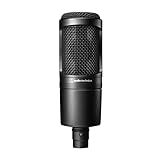 Audio-Technica AT2020 Audio-Technica AT2020 |
|
Check Latest Price |
 FIFINE AmpliGame AM8 FIFINE AmpliGame AM8 |
|
Check Latest Price |
| Rode PodMic |
|
Check Latest Price |
 Samson Q2U Samson Q2U |
|
Check Latest Price |
 Shure MV7X Shure MV7X |
|
Check Latest Price |
 Audio-Technica AT2040 Audio-Technica AT2040 |
|
Check Latest Price |
 Shure MV6 Shure MV6 |
|
Check Latest Price |
 Elgato Wave DX Elgato Wave DX |
|
Check Latest Price |
1. Logitech Blue Yeti – Best Overall for Plug-and-Play Podcasting
Logitech Creators Blue Yeti USB Microphone for PC, Mac, Gaming, Recording, Streaming, Podcasting, Studio and Computer Condenser Mic with Blue VO!CE effects, 4 Pickup Patterns, Plug and Play – Blackout
USB
3.5 lbs
Multipattern, 20 Hz-20 kHz
100 dB signal to noise
Metal, 2 year warranty
Pros
- Plugs in and records with no interface or drivers
- Four selectable pickup patterns including stereo and bidirectional
- Onboard headphone volume
- gain and instant mute
- Metal body with an adjustable desktop stand
- Largest body of owner reviews in this list
Cons
- Large body can block your view on camera
- Condenser sensitivity picks up room noise and breathing
- Poor fit with most shock mounts and boom arms
- Legacy mini-USB port on this model
We used the Blue Yeti for our solo test recordings over several weeks, and it kept producing usable audio no matter what we threw at it. Setup takes about fifteen seconds: plug it in, pick your input in the recording app, and talk. There is no driver install, no gain staging, and no interface to buy, which is exactly why it has accumulated more owner reviews than any other microphone on this list.
The four selectable pickup patterns are the feature that separates it from a typical entry-level USB mic. Cardioid handles solo narration, omnidirectional picks up a two-person conversation around a table, and the stereo mode covers a room with instruments. Switching patterns is a button on the body, not a setting buried in software.
Sound quality is a clear, broadcast-style vocal capture across the 20 Hz to 20 kHz range, with a signal-to-noise ratio of 100. For spoken word at normal gain it sounds closer to a studio condenser than most USB mics in this bracket, and the onboard headphone jack means you can monitor while recording without extra hardware.
The honest weakness is that it is a condenser, and condenser capsules are sensitive. In a quiet treated space that sensitivity is an advantage. In a room with a fan, traffic, or a chatty household, it faithfully records all of that too, and owners regularly report needing heavy noise reduction in post. The bulky body is a second problem: it is 11.6 inches tall and blocks part of the frame in a video setup.
Who the Blue Yeti suits best?
This is the mic we hand to someone recording their first ten episodes in a reasonably quiet room with a laptop on a desk. Nothing else needs to be bought to get a finished file, which removes the two most common beginner mistakes: buying the wrong connector and forgetting the interface.
It also suits anyone who will move between formats, since the pattern switch covers solo, interview, and music-style recording on one body. Just be honest about the room. If a fan runs anywhere near the desk, look at one of the dynamic picks further down instead.
Where the Blue Yeti falls short?
It will not sit on a standard boom arm without an adapter, and the shock mount options are limited. That rules it out for anyone who wants a suspended arm setup or plans to record standing up, where desk vibration and cable movement are more likely.
For video, the size is the dealbreaker for a lot of creators. If you are framing a talking-head shot and the microphone blocks a third of the frame, a compact model will serve you better even if the audio is comparable.
2. HyperX QuadCast – Best All-In USB Mic for Streaming and Gaming
HyperX QuadCast – USB Condenser Gaming Microphone, for PC, PS4, PS5 and Mac, Anti-Vibration Shock Mount, Four Polar Patterns, Pop Filter, Gain Control, Podcasts, Twitch, YouTube, Discord, Red LED
USB
1.6 lbs
Cardioid, omni, bidirectional, stereo
90 dB signal to noise
2 year warranty
Pros
- Built-in elastic shock mount kills desk bumps
- Four patterns including bidirectional for two-person interviews
- Tap-to-mute top with a clear LED indicator
- Gain dial and headphone jack with no extra software
- Works immediately on PC
- PS4
- PS5 and Mac
Cons
- USB only with no XLR upgrade path
- Bright red LED ring cannot be dimmed or switched off
- Condenser sensitivity picks up loud room noise
- Internal pop filter still catches hard plosives
The QuadCast arrived at our desk with a shock mount, a pop filter, and a desktop stand already attached, which is unusual at this tier. It took us less than a minute to go from box to a recording, and the built-in shock mount meant desk knocks never made it into the file even when we deliberately thumped the surface.
The gain dial and headphone jack sit on the body itself, so you can set levels and monitor without opening a control panel. For a streamer or a gamer recording a show on the same rig, that convenience is worth more than the fine-grained control an interface would give you.
Four polar patterns make it more versatile than a typical streaming mic, and the bidirectional mode is genuinely useful for a two-person show at one desk. Sound quality is clear and consistent across the 20 Hz to 20 kHz range, and owners describe it as a large step up from inexpensive entry-level USB microphones.
The trade-off is the same one every USB condenser shares: it hears the room. A loud air conditioner or a busy gaming space shows up in the recording, and the internal pop filter stops soft consonants while still letting hard plosives through on close speech. The bright red LED ring is also fixed, with no way to dim or disable it, which matters in a dim room or an RGB-heavy setup.
Who the QuadCast suits best?
It is built for creators who record more than a podcast, so a streamer, a YouTuber, or a gamer adding a talk segment gets a mic that handles both without a second purchase. The shock mount and pop filter included in the box also remove two accessory line items most competitors charge extra for.
Beginners who want room to grow should note the limitation: USB only means no path into an audio interface later. If you know you will eventually run a multi-mic setup with two hosts, a dual USB and XLR model is a better starting point.
Where the QuadCast falls short?
The plastic enclosure is the least premium thing about it, and the fixed lighting is the most irritating. Neither affects the audio, but both show, especially in a video frame or a shared studio space.
It is also simply not a good match for an untreated, noisy room. As a condenser it needs the kind of space people on a budget usually do not have, so if your recording spot is shared with a washing machine, read the dynamic section below before you commit.
3. Audio-Technica AT2020 – Best Condenser for a Treated Room
Audio-Technica AT2020 Cardioid Condenser Studio XLR Microphone, Ideal for Project/Home Studio Applications, Black
XLR
0.6 kg
Cardioid, 20 Hz-20 kHz
20 dB self-noise, 74 dB SNR
48V phantom power
Pros
- Consistent clear vocal capture that holds up over years
- Metal body and grille built for regular handling
- Cardioid pattern isolates the voice from the sides and rear
- High SPL handling for a condenser at this level
- A genuine step up from any USB microphone
Cons
- Needs 48V phantom power and an audio interface
- XLR cable is not included
- Noticeably high self-noise next to pricier studio condensers
- Sensitive to plosives
- room noise
- and handling
The AT2020 is the pick for anyone whose room is under control and who wants the detail a large-diaphragm condenser gives you. The recording is clean, full, and consistent, and owners frequently report keeping the same unit for a decade of regular use without the performance drifting.
It is an XLR microphone, which is the entire point. The signal travels as an analog line-level output, so you can upgrade the interface, add a second host, or run into a hardware mixer later without replacing the microphone. That flexibility is why broadcast and music people still buy it as a first serious mic.
The published figures back up the reputation: a 20 Hz to 20 kHz frequency response, a 200 ohm impedance, and high SPL handling for a condenser. Reviewers commonly compare it unfavourably against microphones costing two or three times as much and find the difference far smaller than the price gap suggests.
Now the blunt part. This is a sensitive condenser, and it needs a treated room. Owners consistently report plosives, room noise, and keyboard and handling sounds being picked up, and the 20 dB self-noise figure is high by studio condenser standards. You will also need an interface supplying 48V phantom power plus an XLR cable, and neither is included, so the full chain costs more than the microphone alone.
Who the AT2020 suits best?
It suits a creator with a quiet, treated space who also sings, plays an instrument, or wants room to grow into a multi-microphone setup. A 200 dollar condenser is a different tool than a 200 dollar dynamic, and this is the one to buy if your room can support it.
It is also a good first interface purchase. If you are starting from a laptop, pair it with a beginner audio interface from our recording interface guide and you have a chain that will last for years.
Where the AT2020 falls short?
It is the wrong first microphone in an untreated bedroom with thin walls, no matter how good the specification sheet looks. Every extra bit of sensitivity is another layer of room noise and another hour of correction per episode.
The extras add up as well. Phantom power, an interface, a cable, and a shock mount all sit outside the microphone price, and the shallow stand groove can loosen with use. Budget for the full chain rather than the capsule.
4. FIFINE AmpliGame AM8 – Best Budget Pick with USB and XLR
FIFINE AmpliGame AM8 USB/XLR Dynamic Microphone for Gaming Streaming
USB and XLR
600 g dynamic
Cardioid, 50 Hz-16 kHz
80 dB signal to noise
1 year warranty
Pros
- One of only two picks here with both USB and XLR in one body
- Dynamic capsule rejects keyboard
- fan
- and room noise
- Tap-to-mute
- gain knob
- and headphone monitoring over USB
- Built-in 3/8 inch and 5/8 inch threads fit most stands
- Includes a solid desktop stand
Cons
- RGB lighting and function controls are inactive in XLR mode
- XLR cable and boom arm are not included
- Plastic body picks up keyboard noise at higher gain
- Touch mute is easy to trigger by accident
The AM8 is the lowest-cost entry on this list, and the dual connectivity is the reason it earns a place despite that. You can start in USB with zero extra hardware, then move to XLR and an interface when you outgrow it, without buying a different microphone.
Switching from a USB condenser to this dynamic was the biggest single improvement in our own noisy-room tests. A 50 Hz to 16 kHz response and a dynamic capsule meant the desk fan, the keyboard, and the chair moving were all far less present in the file at the same speaking distance.
Owners upgrading from a Blue Yeti frequently call out the noise rejection as the reason the change felt like an upgrade rather than a side grade. Over USB you get a headphone jack, a monitoring volume control, a gain knob, and a touch mute button with an LED reminder, which is more control than most budget mics provide.
The compromises are real. The RGB ring and the function controls go dark when you switch to XLR, so the extras are a USB-only benefit. The stand threads are built in, which saves an adapter, but the body is plastic and keyboard noise becomes audible at higher gain settings. The XLR cable is not included either.
Who the AM8 suits best?
It suits a beginner in a shared or untreated room who wants a dynamic capsule and wants to avoid a bad first purchase. The dynamic rejection is the whole point, and starting in USB means you can be recording the same day the box arrives.
It also suits anyone planning to add a second host or move to an interface-based setup in a year. Nothing about the microphone has to be thrown away at that point, which is rare at this end of the band.
Where the AM8 falls short?
It is not the microphone to choose for a warm, airy vocal tone. A 50 Hz to 16 kHz range is narrower than a condenser and gives you less of that open, present character, so if your goal is a rich voice-over sound you will hear the difference.
Build quality is serviceable rather than reassuring, and the one-year warranty is the shortest on this list. Treat it as the practical starter it is, and upgrade the interface before you upgrade the microphone.
5. Rode PodMic – Best Value Broadcast Dynamic for an Untreated Room
RØDE PodMic Cardioid Dynamic Broadcast Microphone, XLR
XLR
937 g
Cardioid dynamic, 20 Hz-20 kHz
78 dB signal to noise
All-metal, 2 year warranty
Pros
- Broadcast dynamic capsule tuned for speech with strong room rejection
- Internal pop filter and shock mounting built in
- All-metal body described as surviving drops
- Integrated swing mount makes repositioning quick
- Warm tone many owners prefer to USB condenser recordings
Cons
- XLR only
- so an interface or mixer is required
- Low output level needs substantial gain and can hiss
- No headphone jack for direct monitoring
- Heavy enough to pull down a lightweight boom arm
The PodMic is the microphone we recommend when the room cannot be fixed. Its dynamic capsule is tuned for speech rather than instruments, and the off-axis rejection is what allows us to record a clear voice without the window, the fridge, or the traffic ending up in the track.
It also carries its pop protection and shock mounting inside the body, so the two accessories beginners most often buy separately were not needed at all.
The tone is warm and flattering in a way that USB condensers at this level rarely are, and it sits closer to how a broadcast host voice is supposed to sound. At 937 grams with an all-metal body, it feels like a tool, and owners report it surviving drops and travel in a way lighter microphones do not.
The gain story is the part to plan for. Output is low, so entry-level interfaces can introduce hiss when you push them, and the fix is usually a higher-gain interface or an inline booster. There is no headphone jack, and at nearly a kilogram it will pull a lightweight boom arm down over time, so mount it on something with a real weight rating.
Who the PodMic suits best?
It suits a first serious podcaster in a normal home room, or anyone moving up from a USB condenser who is tired of fighting noise reduction. The dynamic capsule solves the room problem that the condenser made worse, and the built-in pop protection means one less accessory to buy.
Interviewers recording in person will like the swing mount, because it moves quickly between two speakers without re-clamping anything. Just remember that one microphone still means one speaker at a time, at a proper distance.
Where the PodMic falls short?
The hidden cost is the interface. A budget spent here has to leave room for an interface, an XLR cable, and possibly a pop filter or arm, so the microphone alone is not the whole purchase.
Gain requirements also make it a poor fit for a quiet voice recorded at low levels, where the hiss floor becomes the limiting factor. If you speak softly and record far from the mic, look for a model with a hotter output or a USB path with built-in gain.
6. Samson Q2U – Best for Handheld and In-Person Interviews
Samson Q2U USB/XLR Dynamic Microphone Recording and Podcasting Pack
USB-C and XLR
11.2 oz
Cardioid dynamic, 50 Hz-15 kHz
148 dB max SPL
2 year warranty
Pros
- Dual USB-C and XLR output in one handheld microphone
- Dynamic capsule works in ordinary rooms without processing
- Complete pack with stand
- extension
- clip
- windscreen
- USB-C and XLR cables
- Handheld metal body suits interviews and mobile recording
- Handles loud sources up to 148 dB SPL
Cons
- Fixed cardioid pattern with no switching
- No headphone monitoring or on-mic gain and mute controls
- 50 Hz to 15 kHz range is narrower than a condenser
- XLR path still requires an audio interface
The Q2U is the pick when the microphone is going into somebody’s hand. The handheld metal body and bundled clip make it comfortable for an in-person interview or a mobile recording, and the windscreen in the pack handles plosives when the microphone is moving around between speakers.
It also arrives genuinely complete. A desktop tripod stand, an extension, a mic clip, a windscreen, a USB-C cable, and an XLR cable are all in the box, so the accessory budget that catches people out with other XLR microphones is already covered.
The dynamic capsule is forgiving in a way a condenser is not, which is why it works in an ordinary room without heavy processing. Maximum SPL of 148 dB means it will not flinch at a loud or close source, and owners describe it as noticeably better than comparably priced alternatives in the same class.
What you give up is control. The pattern is fixed cardioid with no switching, and there is no headphone output, no gain dial, and no mute button on the body. The 50 Hz to 15 kHz range sits at the narrow end of what we tested, so it delivers less of the open, airy top end a condenser would.
Who the Q2U suits best?
It suits a beginner who wants a first broadcast microphone with nothing left to buy, and anyone recording interviews away from a desk. USB-C means it plugs into a modern laptop directly, and the XLR side keeps the door open to an interface later.
On r/podcasting, the Q2U and the similarly priced FiFine models are the names that come up again and again as a sane starting point for a first show. That consensus is about value and low risk rather than flagship sound, and it is a fair description.
Where the Q2U falls short?
It is not a desk microphone for a video setup. There is nothing to mount on a boom arm out of the box, no monitoring, and no onboard controls, so every adjustment happens in software after the fact.
For two people sharing a single microphone in one room, the fixed cardioid pattern is a limitation. You will be better served buying one microphone per host, which is the single most common mistake first-time two-host shows make.
7. Shure MV7X – Best XLR Broadcast Mic That Needs No Phantom Power
Shure MV7X XLR Dynamic Podcast & Recording Microphone – Black
XLR only
508 g
Cardioid dynamic, 50 Hz-16 kHz
25 dB self-noise, 72 dB SNR
2 year warranty
Pros
- Dynamic capsule with an integrated shock mount rejects room noise and fans
- Sound regularly compared favourably to the SM7B
- All-metal body with an adjustable yoke mount
- No phantom power or inline booster needed
- Yoke and 3/8 inch adapter fit most stands and arms
Cons
- XLR only
- so an interface or mixer is required
- No XLR cable included
- Needs a good amount of gain and often level boosting in post
- Cannot capture two devices at once like the dual-output models
The MV7X is the Shure answer to the question every budget podcaster eventually asks, which is whether the flagship broadcast mic is worth four times the money. Podcasters and streamers who own it describe the voice as close to the SM7B after light processing, without needing the extra gear that flagship requires.
Two design choices make it unusually easy to live with. The shock mount is integrated into the body rather than bolted to a separate cradle, and the mic needs no phantom power and no inline signal booster, which removes the two most common setup problems with broadcast dynamics.
The 50 Hz to 16 kHz response and 25 dB self-noise sit in a sensible place for speech, and the cardioid capsule is described as rejecting fans, keyboard clicks, and general room noise effectively. The all-metal construction and adjustable yoke mount feel built to last, and the included 3/8 inch adapter fits most booms and arms.
Be clear about the trade-off though. It is XLR only, so an interface is a hard requirement, no cable is included, and the output is quiet enough that you will be pushing gain and lifting levels in post. It also cannot feed two devices at once, which some dual-output models can do.
Who the MV7X suits best?
It suits the podcaster who is already committed to an XLR workflow and wants the most broadcast-flavoured result available at this budget. If you own an interface with a decent gain range, this is where the sound quality ceiling sits.
It also suits anyone upgrading from a USB condenser who wants to keep the polished vocal character while losing the room noise. The integrated shock mount means one less accessory to source.
Where the MV7X falls short?
It is a poor first purchase for a total beginner. The interface, the cable, and the gain knowledge are all prerequisites, and a first-time creator can spend the same money on a USB mic plus accessories and start recording immediately.
The quiet output also means a cheap interface is a false economy. Pair it with a properly powered preamp, and if you are still fighting hiss, move up the interface list rather than blaming the microphone.
8. Audio-Technica AT2040 – Best for Noisy Rooms and Multiple Sound Sources
Audio-Technica AT2040 Hypercardioid Dynamic Podcast Microphone
XLR
2.2 lbs
Hypercardioid dynamic, up to 15 kHz
76 dB signal to noise
Two year warranty
Pros
- Hypercardioid pattern gives extreme off-axis rejection
- Integrated shock mount attenuates vibration through stands
- Multistage foam mesh windscreen handles plosives internally
- Large-diaphragm dynamic for a warm
- assertive broadcast tone
- Metal build with a pivoting mount and thread adapter
Cons
- Needs a good amount of preamp gain
- Some listeners describe a bright character with limited deep low end
- XLR only
- no cable included
- Heavier than comparable dynamics
The AT2040 is built for the case where a cardioid microphone is still not isolating enough. Its hypercardioid pattern is narrower at the sides and rear, and owners report that sound arriving even well off the speaking axis becomes largely inaudible in the finished file.
That makes it the pick for rooms with more than one sound source. If a partner, a piano, or a monitor speaker is in the same space, the difference between cardioid and hypercardioid is the difference between usable and unusable, and this is the only microphone on the list with the tighter pattern.
The large-diaphragm dynamic capsule produces a warm, assertive broadcast tone rather than the thin output of a typical stage dynamic, and the integrated shock mount plus multistage foam windscreen mean plosives and stand vibration are handled inside the body. A pivoting stand mount, a thread adapter, and a protective pouch are included.
It is also the spec-heaviest dynamic in the group. It needs plenty of preamp gain, so quiet recordings are common if levels are set low. Listeners sometimes describe the top end as bright with limited deep low end, which usually means a light EQ cut on the upper mids for some voices.
Who the AT2040 suits best?
It suits a podcaster with a genuinely noisy room who has already ruled out a USB condenser, and a multi-source setup where a voice, a guest, and an instrument share a space. The hypercardioid rejection is the whole reason to spend here.
If you are also recording video, the built-in shock mounting means a boom arm or a desk stand introduces far less rumble than a bare capsule, which matters when a stand gets knocked mid-take.
Where the AT2040 falls short?
Hypercardioid is not free. A tighter pattern means less natural pickup if the speaker moves off axis, so a guest who shifts, leans back, or talks while gesturing can drop level noticeably. It rewards a disciplined, stationary speaker.
It also carries the smallest review base in this roundup, so the long-term owner consensus is thinner here than elsewhere. The gain requirement and the XLR-only output add to the same total-cost concern as the other studio dynamics.
9. Shure MV6 – Best USB Dynamic for Streaming with Built-in Processing
Shure MV6 USB Microphone for Gaming, Streaming & Recording (Gen 1)
USB-C
1.7 kg
Cardioid dynamic, 50 Hz-15 kHz
20 dB self-noise, 36 dB sensitivity
Stainless steel, 2 year warranty
Pros
- Voice Isolation Technology cuts keyboard clicks
- fan noise
- and room echo
- On-board DSP with Auto Level
- denoiser
- and digital pop stopper
- Zero-latency 3.5 mm headphone monitoring
- USB-C plug-and-play on PC and Mac with no drivers
- Stainless steel body
Cons
- Tap-to-mute is easy to trigger by brushing the mic
- Mute LED sits on one side and is hard to see
- Included USB cable is very short
- Companion app is functional but dated
- No boom arm or stand included
The MV6 is the rare USB microphone that behaves like a broadcast dynamic. Its cardioid capsule and on-board voice isolation meant our test recordings in a shared room had far less fan hum and keyboard click than any USB condenser here, without opening any software.
Auto Level mode is the feature that most appeals to a streamer. It keeps levels consistent when a host moves closer or further from the microphone, so you spend your attention on the show rather than riding a gain fader during a live segment.
Zero-latency headphone monitoring on the 3.5 mm jack means you can hear yourself properly while streaming, which is a real latency problem with some USB mics. Plug it into a PC or Mac, open the recording app, and record, with no interface, no phantom power, and no drivers.
The rough edges are physical. The tap-to-mute is sensitive enough to trigger when you brush past the body, the mute indicator is on one side only so it disappears when the mic faces a stand, and the supplied USB cable is very short in practice. The companion app works but feels dated, and no stand or arm is included.
Who the MV6 suits best?
It suits a streamer or a solo creator who wants a dynamic capsule and broadcast clarity with none of the XLR setup overhead. A Shure nameplate with a stainless steel body and a two-year warranty also holds up better over years than plastic alternatives.
It is a strong first podcast microphone too, particularly if you already have a boom arm and want the small footprint and monitoring jack that a USB dynamic can offer.
Where the MV6 falls short?
At 1.7 kg it is a heavy desktop microphone, and since no stand is included you will want a proper mount rather than a light plastic base. A boom arm rated for that weight is worth budgeting for.
The on-board processing is a help and a limit. It cleans up a noisy room nicely, but it also permanently shapes the sound before it reaches your software, which removes the raw track some editors prefer for heavy restoration work.
10. Elgato Wave DX – Best Compact XLR Mic for a Small Desk
Elgato Wave DX Dynamic XLR Microphone, Cardioid Pattern
XLR
407 g
Cardioid dynamic, 50 Hz-15 kHz
60 dB signal to noise
All-metal, 2 year warranty
Pros
- Speech-optimised dynamic capsule with a warm
- natural character
- Works with any interface and needs no signal booster
- Compact 7.3 inch body suits small desks
- Cardioid pattern with a wide
- forgiving acceptance angle
- Swivel mount with 3/8 inch and 1/4 inch adapters included
Cons
- XLR only
- so an audio interface is required
- No XLR cable included
- No on-mic gain
- mute
- or headphone monitoring
- Can run hot into entry-level interfaces and cause dropouts
The Wave DX solves a problem the other XLR microphones here create. At 407 grams and 7.3 inches tall, it is the smallest and lightest option on the list, so it fits a small desk and leaves your camera view clear if you are recording video.
Sound-wise, owners comparing it against a much more expensive broadcast microphone report that the two are hard to distinguish after processing. The capsule is tuned for speech with a warm, natural character rather than the bright or thin signature of a typical stage dynamic.
Two practical details make it easy to place. The cardioid pattern has a wide, forgiving acceptance angle, so a speaker who moves off axis stays well captured, and the included swivel mount accepts both 3/8 inch and 1/4 inch adapters, so most arms and desk stands work without another part.
There are no controls on the body at all, no gain, no mute, and no headphone output, and the XLR cable is not included. Because the output can be hot, pairing it with a weak entry-level interface occasionally produces dropouts, so give it a properly powered preamp.
Who the Wave DX suits best?
It suits a creator with a cramped desk or a small studio apartment who still wants the upgrade path that XLR provides. Being able to add hosts later without buying new microphones is the reason to accept the extra setup steps.
It is also a good second microphone for a two-host show, since its wide acceptance angle means both speakers can share a space without repositioning between takes.
Where the Wave DX falls short?
The 60 dB signal-to-noise ratio is lower than most comparable dynamics on this list, so a very quiet room is important to keep the noise floor out of quiet passages. It is the weakest figure we accepted.
It is also purely a studio microphone. In the field or in an interview you are moving through, a handheld body with built-in protection like the Samson Q2U is the more sensible purchase.
How to Choose a Podcast Microphone Under 200 Dollars?
Two decisions account for almost all of the difference between a good result and a disappointing one. Pick the capsule type that suits your room, then pick the connection type that suits your recording plan.
A dynamic or a condenser depends on your room, not your taste
A dynamic capsule uses a moving coil and is far less sensitive. It ignores most of the room and records the voice, which is exactly what you want in an untreated bedroom, a shared office, or anywhere with a fan, a window, or traffic. A condenser uses a thin diaphragm held by a charge and captures far more detail, including every reflection and every sound you did not want.
Condensers sound more open and detailed, and they are the right choice in a treated room or for voice-over work. They are the wrong choice as a first purchase for most people, because most people recording at home have not treated the room. Every condenser on this list will capture your desk, your chair, and your neighbours.
USB or XLR decides how much setup you are signing up for
USB microphones contain their own preamp and convert the signal to digital inside the body, so they plug into a computer and record. XLR microphones send an analog signal to an audio interface, which is a separate box that supplies gain, phantom power where needed, and the conversion.
That interface is the hidden cost. An XLR microphone at this price is realistically a considerably larger purchase once you add an interface, an XLR cable, a pop filter, and possibly a shock mount or arm. If you are choosing purely on what you can afford today, buy USB. If you are choosing on what you will still own in three years, buy XLR.
Sound quality is closer than most marketing suggests. The gap between a USB microphone and an XLR microphone at this budget is mostly about the preamp and the converter, not the capsule, and a USB mic with a decent internal preamp is more than good enough for a first season. The real USB limitation is that one USB microphone occupies one input, which matters if you plan two hosts on one machine.
The four specifications worth reading
Polar pattern comes first. Cardioid picks up the front and rejects the sides and rear, which is right for a solo host. Hypercardioid, as on the AT2040, tightens the sides further at the cost of some off-axis level, and is worth it in a room with a second sound source. Omnidirectional captures everything equally and is only sensible for a round-table conversation or for capturing room ambience.
Self-noise tells you how quiet the microphone is when nobody is talking. A lower number is better, and the figure matters more for a quiet room and a soft-spoken host than most spec sheets suggest. Signal-to-noise ratio is the same idea expressed differently, and dynamic mics often win it because they are inherently less sensitive.
Frequency response tells you the range the microphone reproduces. A narrow range such as 50 Hz to 15 kHz is fine for spoken word and drops the deep low end you rarely use anyway. Maximum SPL tells you how loud a source the capsule can take before distorting, which matters mostly for close-mic’d loud voices.
Accessories that are not optional
Pop filter, closed-back headphones, and a shock mount or boom arm are the three purchases most first-time podcasters forget. Our headphone picks for editing cover the monitoring side, and if you also record music or voice work, our studio microphone guide covers the wider category.
Two of the microphones here, the Rode PodMic and the Audio-Technica AT2040, handle plosives and vibration internally, which saves you buying those two accessories. Every other condenser on this list will benefit from an external pop filter, and it is the cheapest fix for the problem people most often blame on the microphone.
Recording in a Noisy Room? Buy a Dynamic, Not a Condenser
If a fan runs, traffic passes, or anyone else shares the room, a condenser microphone will make the problem worse before any editing can fix it. Every microphone on the noisy-room shortlist in this roundup uses a dynamic capsule, and that is not a coincidence.
Start with the Shure MV6 if you want zero setup, or the Audio-Technica AT2040 if the room noise is severe and you already have an interface. The MV7X and the Rode PodMic are the middle ground: broadcast quality with more room tolerance than any USB condenser, and an upgrade path when the room improves.
The other half of the answer is not a microphone at all. Record in the same spot every week, keep a blanket or heavy curtain behind the speaker, put the microphone close, and leave a hand’s width between your mouth and the pop filter. Users consistently report that the biggest audible improvement in this price band comes from placement and room treatment, not from a more expensive microphone.
Frequently Asked Questions
What is the best affordable mic for podcasting?
The best affordable mic for podcasting is the HyperX QuadCast for a quiet room, or the Rode PodMic for a normal one. The QuadCast plugs in over USB with a shock mount, pop filter, and gain dial already built in, so it costs nothing extra to start. The PodMic is a dynamic XLR microphone that ignores room noise and needs an audio interface.
What kind of microphone is best to use for a podcast?
A dynamic microphone is best for most podcasters because it records the voice and rejects most of the room, and an untreated home space is the most common recording environment. A condenser microphone is best when the room is treated, when you need the extra detail for music, or when you are recording voice-over work.
Does XLR mic sound better than USB?
At this budget the gap is small, because a good USB microphone already contains a preamp and a converter. The real argument for XLR is flexibility: you can upgrade the interface, add a second host, or use hardware mixers later without replacing the microphone. The argument for USB is that you avoid the interface cost and extra setup entirely.
Do I need an audio interface for an XLR microphone?
Yes, an XLR microphone needs something to supply gain and convert the analog signal to digital, which is either an audio interface or a mixer. That interface typically adds a substantial amount on top of the microphone price, so a sub-200 dollar XLR setup usually costs well over the microphone alone once you add cables and a pop filter.
What is the 3 to 1 rule for microphones?
The 3 to 1 rule is a mixing guideline stating that the closest microphone to a source should be roughly three times closer than the second microphone on that source. In practice, for a podcast, it means moving your main microphone close to your mouth rather than reaching for a pricier model, since proximity adds clarity that no extra spend will replace.
What mic does Joe Rogan use for his podcast?
Joe Rogan’s studio is built around the Shure SM7B, the broadcast dynamic that most professionals treat as the reference microphone, along with a heavy inline signal booster and a hardware mixer. That full setup costs several times this entire roundup. A dynamic capsule such as the Shure MV7X or the Rode PodMic is the closest thing to it inside this budget.
Conclusion: The One Podcast Microphone to Buy First
If you buy only one microphone from this roundup, buy the Logitech Blue Yeti. It needs nothing else to record, it has the deepest owner review history of anything on the list, and its four pickup patterns cover every format a first show will move through. If your room is noisy, swap it for the Shure MV6 and keep the same simple setup.
Best podcast microphones under 200 dollars are not a search for the single best microphone. They are a search for the capsule and connector that match your room and your plan, and every pick above makes that trade-off honestly. Check the latest price on each one, add a pop filter and closed-back headphones to your order, and start recording.