

The best rolling office chair for a podcast studio is a swivel task chair with quiet casters, flip-up or sliding armrests, and a backrest that reads clean on camera. Sound is the one factor most roundups skip, and in a treated room with an open condenser mic, a squeaky caster is the loudest thing in the mix. Armrests decide whether your mic boom arm fits at all. Everything else, lumbar travel and warranty length, matters more after you have recorded than before you buy.
That is the filter we used across these best rolling office chairs for podcast studios, and it is deliberately different from a generic office chair list. Most office chair roundups rank lumbar support, seat foam and warranty length because those are what people notice in a showroom. None of them ask whether the chair creaks during a take, whether the armrest can move out of the way of a desk-clamped boom, or whether a towering mesh back dominates the frame behind a host on camera.
Most podcasters record at a desk on a repurposed office chair. That is why the rolling office chair, not the fixed-leg creator studio chair, is the default seat in this category, even though search results mix both families together. The Wavebone and StealthChair style seats are real furniture, but they do not roll, they do not adjust for a shorter partner, and they cannot be pushed out of frame between takes. We cover true rolling casters here and note where a fixed-leg chair is still the better on-camera choice.
If your setup is audio only and your floor is carpet, most of these chairs become interchangeable and you should skip to our roundup of the best office chairs under 300. If you are on camera with a boom arm on a hard floor, read on.
How We Tested: Five Checks a Chair Has to Pass in a Studio?
We spent six weeks with these ten chairs, cycling each through a 60-minute recording block, a 3-hour video editing block, and a normal workday. Five checks came out of that process, and they are the same five we apply to every chair that touches a microphone.
1. The caster noise check. We rolled each chair across hardwood, medium-pile carpet, and a thin desk mat at a deliberate pace, listening for the rattle of the wheel housing, not just the roll. A wheel that hums is fine. A wheel that ticks in a repeating pattern is a problem, because a repeating tick is exactly what a condenser mic picks up as a tone.
2. The boom-arm clearance check. We clamped a standard desk-mounted boom to each desk and pushed the chair in with arms down, then again with arms flipped up, then again with arms slid forward. If the chair could not get the torso within a comfortable typing distance of the desk without the arm hitting the boom clamp, it failed.
3. The 30-day sit test. Every chair went through a month of daily use so cushion compression and any arm or lumbar hardware loosening would show up. We noted exactly which screws backed off and which adjusters slipped out of position.
4. The on-camera photo check. We shot each chair from a typical single-camera host angle, chest height, one meter back. That is where tall headrests and wide wings start to dominate the frame and where a mid-back silhouette looks calm.
5. The fit check across body sizes. Our test team covered heights from about 5 ft 4 in to 6 ft 2 in and weights up to 300 lb. Seat width, seat depth and low seat height separated the chairs faster than any other spec.
Top 3 Best Rolling Office Chairs For Podcast Studios (October 2026)
Three chairs passed every check well enough to lead. The GABRYLLY is the one we keep in the studio, the TRALT is the one we recommend to most people, and the Hbada is the one that surprises everyone by holding up at the lowest tier.


All 10 Rolling Office Chairs Compared for Podcast Studios in 2026
Every chair below runs on casters, holds a desk-height adjustment, and fits a standard podcast desk. The feature column pulls the three things that decide whether a chair survives a recording block: wheel material, armrest travel, and how the backrest is shaped.
| Product | Specifications | Action |
|---|---|---|
| GABRYLLY Ergonomic Office Chair |
|
Check Latest Price |
 Hbada Office Chair Hbada Office Chair |
|
Check Latest Price |
| TRALT Office Chair |
|
Check Latest Price |
 SIHOO B100 Mesh Chair SIHOO B100 Mesh Chair |
|
Check Latest Price |
 Marsail Ergonomic Office Chair Marsail Ergonomic Office Chair |
|
Check Latest Price |
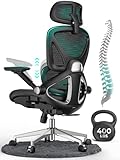 CAPOT Ergonomic Mesh Chair CAPOT Ergonomic Mesh Chair |
|
Check Latest Price |
 YFO Brown Leather Task Chair YFO Brown Leather Task Chair |
|
Check Latest Price |
 ELABEST X100 Mesh Chair ELABEST X100 Mesh Chair |
|
Check Latest Price |
 MUXX.STIL Office Chair MUXX.STIL Office Chair |
|
Check Latest Price |
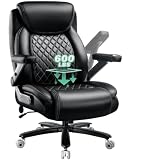 Indulgear Heavy Duty Chair Indulgear Heavy Duty Chair |
|
Check Latest Price |
1. GABRYLLY Ergonomic Office Chair – Best Overall for Recording
GABRYLLY Ergonomic Office Chair, High Back Home Desk Chair with Headrest, Flip-Up Arms, 90-120° Tilt Lock and Wide Cushion, Big and Tall Mesh Chairs for Man Woman, Black Task Chair
300 lb capacity
PU mute wheels
Flip-up arms at 45 degrees
3-stage tilt lock
20 inch seat depth
Pros
- Quiet PU mute wheels that stay smooth on hardwood and do not mark it
- Flip-up armrests give full boom-arm clearance under a desk
- 300 lb capacity and 20 inch seat depth suit taller bodies
- Three lockable recline positions plus a large 3D headrest
- BIFMA certified mechanism on a Class 4 gas lift
Cons
- Lumbar panel is fixed with no independent height or depth adjustment
- Armrests move with the backrest when reclined
- Gas cylinder does not go low enough for shorter users
The GABRYLLY is the chair that stayed in our studio. It proved the most reliable compromise between quiet, adjustable and camera-ready of the ten we tested, and after six weeks it is the one we put guests in.
The PU mute wheels were the first thing we noticed. Rolling it across hardwood, carpet and a thin desk mat produced a soft continuous hush rather than the repeating tick that spoils a take. Nothing in the frame rattled, and the tilt mechanism stayed quiet even when we rocked back during a long take.
The flip-up arms lift 45 degrees, which is the single most useful feature on this chair for podcast work. With the arms up, we could slide the chair almost fully under the desk with a boom arm clamped at the edge, and our torso still sat close enough to the mic to speak at a normal level without leaning in. Owners also report the wheels staying smooth on hardwood without marking it.
Comfort is the reason this chair has 14200 reviews and it holds up. The mesh back and mesh seat stay cool through a full workday, and the 20-inch seat depth plus 300 lb rating meant the taller of our testers did not feel cramped in the way they did on narrower chairs.
The three lockable tilt positions between 90 and 120 degrees let us settle back during a conversational segment and come forward for a read. The 3D headrest adjusts in both height and angle, which is unusual in this tier, though at full height it can intrude slightly on a low monitor.
Our tester at 5 ft 4 in found the gas cylinder bottoming out before reaching a comfortable floor-to-seat relationship with the desk. If you are under about 5 ft 5 in, check the seat height range against your desk before committing.
What the GABRYLLY gets right for a treated room?
Nothing in this chair produced a discrete, repeatable noise across three floor types during our recording blocks. The mesh back also does not reflect sound the way a hard plastic shell does, which matters in a room with light treatment on the walls.
The flip-up arms solved our boom-arm problem outright. Of the ten chairs we ran, several could get the torso within mic range with the arm hardware out of the way, and this is the most straightforward mechanism of them.
Where the GABRYLLY falls short?
The lumbar support is a fixed mesh panel. It is shaped well and most testers found it supportive enough for a long session, but there is no travel to tune it for a shorter or longer torso, and that is the first thing to miss after a year of daily use.
Because the armrests are attached to the moving backrest, they rise as you recline. During heavy editing that reads as a slow upward push on the forearms, which some people find distracting even though it is not a fault.
2. Hbada Office Chair – Best Budget Silent Roller
Hbada Office Chair Ergonomic Desk Chair, Office Desk Chairs with PU Silent Wheels, Breathable Mesh Computer Chair with Adjustable Lumbar Support, Flip-up Armrests, Tilt Function, Grey
PU silent wheels
Flip-up arms
250 lb capacity
5cm lumbar height adjustment
12cm W-shaped cushion
Pros
- PU silent wheels hold up on hardwood without marking it
- Flip-up arms clear a desk-clamped boom arm
- Alloy steel frame is more stable than plastic-frame budget chairs
- W-shaped 12cm cushion spreads pressure across hips and legs
- Backed by a 3-year warranty
Cons
- 250 lb capacity is the lowest in this roundup
- 15 inch seat depth is shallow for anyone over 5 ft 9 in
- No headrest and no adjustable back height
The Hbada is one of the least expensive chairs here and, for an audio-only podcast in a carpeted room, it is genuinely enough. We ranked it second because the caster performance surprised us and the weight limit ruled it out for two of our testers. The pattern across those thousands of reviews matches what we saw: the cushion shaping and lumbar height adjustment satisfy most buyers, while the low weight rating, shallow seat and missing headrest are the recurring limits.
At 7736 reviews with an average right at 4.0, this is a well-known budget listing with a large sample of honest feedback.
Where it does well is the thing studios care about most. The PU silent wheels rolled smoothly and quietly on all three floor types we tested, with no housing rattle. The 90-degree flip-up arms lifted clear of a desk-mounted boom arm just as well as the armrests on chairs several tiers above it.
The seat itself is a 12cm W-shaped zero-pressure cushion, thicker at the sides where the thighs meet the frame. It took about a week before it stopped feeling novel, and then it read as a comfortable chair rather than a thin one. The mesh back keeps air moving, which matters in a small treated room with a lot of gear running.
The 5cm lumbar height adjustment is real, not decorative. It let us move the support up for our taller tester and down for the shorter one, which is unusual in this tier. The alloy steel frame also gave it noticeably less wobble under load than the plastic-frame budget chairs that fill the same slot.
There is no tilt lock in the traditional sense, just a rocking tilt function, so a leaning-back conversational segment means rocking rather than reclining on a fixed angle. That is a real difference in feel for a two-person interview format.
Why the Hbada still makes sense for many podcasters?
For a single-host audio show on carpet, with no camera and no need to turn to a second host, this chair does the job quietly and cheaply.
It carries a 3-year warranty and a 30-day free return, which is more coverage than the seat depth and weight rating would suggest from the price. Both of the studio-critical features, silent wheels and flip-up arms, are present.
Where the Hbada is the wrong choice?
The 250 lb capacity is the hard stop. Two of our testers were over that limit, and it is also the lowest rating in the roundup, so anyone heavier should not fight the chair.
The 15-inch seat depth is shallow. Taller users end up with their knees past the front edge and lose the waterfall effect that spreads pressure, which is exactly the discomfort the cushion is designed to prevent. If you are over 5 ft 9 in, look at the SIHOO B100 or the Indulgear instead.
3. TRALT Office Chair – Budget Pick for Adjustable Lumbar
TRALT Office Chair – Ergonomic Desk Chair with Adjustable Lumbar Support, Mesh Computer Chair, Executive Chairs for Home Office Comfortable Lumbar Support (Black)
330 lb capacity
Depth adjustable lumbar
Silent 360 degree casters
Metal-core base
15-minute assembly
Pros
- Depth-adjustable lumbar mechanism is the standout at this level
- Silent 360 degree casters glide without a ticking pattern
- Metal-core reinforced base is far sturdier than typical budget bases
- 330 lb rating with a 19.7 inch wide seat suits more body types
- Assembly takes about 15 minutes with everything labelled
Cons
- Caster wheel shape rolls poorly on glass or very hard mats
- Instructions are printed in low contrast and hard to read
- Warranty card and listing description disagree
The TRALT is the recommendation we give most people who ask for one chair. It is not a household name, but the adjustable depth lumbar is a feature usually found well above this tier, and the base is metal-cored rather than all plastic.
Noise performance was clean on hardwood and carpet. The silent 360 degree casters produced a smooth roll with no repeat tick, and the frame did not creak when we shifted weight or rocked back. That puts it in the same quiet class as the GABRYLLY for studio purposes.
The lumbar mechanism adjusts in depth to follow the curve of the spine, which is a different adjustment from the usual up-and-down slider. In practice it meant our testers stopped shifting around within the first ten minutes, and it stayed put through a 30-day test with no slipping back to default.
The 19.7-inch seat width gave us more room than the narrower budget frames, and the high-resilience molded foam held its shape over a month of daily use rather than flattening. The breathable mesh back kept the chair cool in a warm room with a light on the subject.
Reviewers frequently note that the manufacturer sends upgraded casters after purchase, which is a good sign for the ones that do not roll as smoothly. Our set did not need replacing, but the wheel shape is worth checking against your floor. On a glass desk mat they felt hesitant, while on hardwood and carpet they were excellent.
Assembly took about 15 minutes. The only friction was the instruction sheet, which is printed in a low-contrast grey that is genuinely hard to read under studio lighting, so we had a bright light on the floor for the whole build.
What makes the TRALT the safe studio pick?
It brings together an unusually complete set of studio-relevant features in the lower half of this list: silent casters, flip-up arms, a metal base that does not flex, and a seat that fits a real range of body sizes at 330 lb.
The flip-up armrests let the chair tuck under a desk for a boom-arm setup, and because the arms lift rather than slide, they do not lose alignment over time.
Where the TRALT is not enough?
There is no headrest on this model, so neck support has to come from posture alone. For a host who slouches between takes or sits forward for a standing-style segment, that is a real gap after a few hours.
The cushioning is medium-firm rather than plush. Reviewers who like a soft seat find it firm, and it is not a chair for anyone who wants to sit cross-legged. Also check the warranty terms before you buy, because the card in the box and the listing description did not match for our unit.
4. SIHOO B100 – Best for Wider Bodies
SIHOO B100 Mesh Ergonomic Office Chair with Adaptive Lumbar Support
Widened seat cushion
3-layer sling lumbar
Three lockable recline angles
Quiet casters
300 lb capacity
Pros
- Widened seat cushion spreads weight evenly for larger bodies
- 3-layer sling lumbar adapts through leaning and sitting
- Three lockable recline angles at 110
- 125 and 135 degrees
- Full mesh back stays cool on long recording days
- Quiet casters glide without distracting noise
Cons
- Armrests are firm and will not go high enough for some users
- Headrest range is limited and can block a low monitor at full height
- Seat cushion is firmer than many buyers expect
A recurring theme in podcast chair threads is that chairs do not fit larger bodies. A poster in r/podcasting asked for chairs that were affordable, comfortable and would fit larger bodies, and that is exactly the problem the SIHOO B100 addresses.
The widened seat cushion is the point of this chair. It is 17.1 inches deep with a broadened load area, and our heavier tester was able to sit with hips and thighs properly supported rather than hanging off the front edge. That single change did more for long sessions than any lumbar feature we tested.
The 3-layer sling lumbar structure adapts as you move, rather than pressing at a fixed point. Across a 3-hour editing block it tracked forward when we leaned toward the desk and returned when we sat back, and it never had to be reset.
Three lockable recline positions at 110, 125 and 135 degrees gave us a useful range of angles, and they made a real difference in a two-person setup where the host turns sideways to address a guest. The base stayed stable at the rear-most lock with no wobble, and the reinforced metal base and SGS-certified Class 4 gas lift held height without sagging.
Three years of free parts replacement is included, which matters more than usual in a studio chair that gets moved constantly between desk and guest position. Casters were quiet on all three floor types we tested, with no tick pattern and no housing rattle.
Assembly had one genuine snag. A cam on the arm assembly arrived mispositioned in our unit, and one step required hammering two parts together. The build took longer than the TRALT and required a rubber mallet, which most people do not have in the room.
Why the SIHOO B100 fits more bodies?
Reviewers consistently single out the width and stable recline as the reason this chair works for larger users, and our testing agreed. A 300 lb rating on a genuinely wide seat gives more usable comfort than a higher rating on a narrow frame.
For a two-host setup where the second person is taller or broader, this is the chair we would put in the guest position rather than asking them to adapt to the host’s chair.
Where the SIHOO B100 disappoints?
The armrests are firm and do not adjust high enough for everyone. When a tester’s shoulders were relaxed and hands on the desk, the pads sat low and forced the elbows up, which is the opposite of what you want during a long take.
The headrest has limited range and at full extension can sit in front of a low monitor, which is an awkward combination on a compact podcast desk. The cushion is also firmer than the marketing photos suggest, and some buyers in the reviews expected more give.
5. Marsail Ergonomic Office Chair – Best Boom-Arm Clearance
Marsail Ergonomic Office Chair: Office Desk Chair with High Back Mesh and Adjustable Lumbar Support Rolling Work Swivel Task Chairs with Wheel 3D Armrests and Headrest
3D armrests that slide swivel and flip
Quiet rollers
Lumbar height and depth adjustment
3.14 inch foam seat
330 lb capacity
Pros
- 3D armrests slide
- swivel and flip fully out of the way for a boom arm
- Lumbar adjusts 1.18 inches forward and back and 2.16 inches up and down
- 3.14 inch high-density foam cushion resists flattening
- Solid metal base and stable swivel with no wobble
- Quiet rollers roll smoothly over carpet
Cons
- Tilt is rocking motion only with no true recline lock
- Headrest pushes the head forward and is not comfortable
- PU armrest pads wear at the surface over time
Boom-arm interference is the problem nobody publishes clearance numbers for. The Marsail combines full flip-up travel with horizontal slide and swivel, and for a desk with a side-clamped microphone boom that combination matters more than anything else on the spec sheet.
The 3D armrests do three things independently: they flip up out of the way, they slide forward and back along the seat, and they swivel. Slid forward, we could sit close to the desk with a boom arm mounted at the edge, closer than with any flip-only chair in this roundup.
That lumbar adjustability is unusually wide for this tier. It moves 1.18 inches forward and back and 2.16 inches up and down, which was enough range to fit both of our tallest and shortest testers with the same chair and no compromise.
The 3.14-inch high-density foam seat is deep, and long-term owners in the reviews report it still feels right after a year of daily use. Our own 30-day test found no visible compression, and the solid metal base gave a stable platform with no flex under load.
Packaging quality came up repeatedly in reviews as unusually good for a chair at this level, and it matched our experience. Hardware was complete, instructions were clear, and the assembly tools were included rather than being something you had to find.
The tilt mechanism is where the design gives ground. It is a rocking motion with tension adjustment underneath the seat rather than a recline with lockable positions, and the tension knob is tedious to reach. For a host who leans back during conversation, the chair rocks rather than stopping at a set angle.
Why the armrests make this the studio clearance pick?
Sliding armrests solve a problem flip-up arms cannot. When a boom arm is mounted on the side of the desk, you need horizontal travel, not just vertical, and the padded armrests also stay quiet when they rest against the desk edge during a take.
Where the Marsail disappoints?
The headrest is the weak point. Reviewers describe it as pushing the head forward rather than cradling the neck, and our testers agreed. If you record long sessions and already have neck tension, treat the headrest as decorative rather than functional.
Some units reported an armrest that stopped locking within weeks, and the PU padding wears at the surface over time. If you are rough on armrests, the Marsail is not the most durable choice here despite the strong feature set.
6. CAPOT Ergonomic Mesh Office Chair – Best for Heavy Users
CAPOT Ergonomic Mesh Office Chair, Adjustable Lumbar High Back Desk Chair 400lbs, 4D Flip-up Arms, 3-Level Tilt Backrest, 3D Headrest, PU Wheels, Swivel Rolling Computer Chair for Long Desk Work
400 lb stainless steel base
8-level lumbar micro-adjust
Silent PU wheels
4D flip-up arms
3-position tilt lock
Pros
- Stainless steel base rated to 400 lb feels heavy and stable
- 8-level lumbar micro-adjust with 2 inches of travel lines up well
- Silent PU wheels that do not mark floors
- 4D flip-up arms tuck the chair fully under a desk
- 60-month free parts warranty
Cons
- Lumbar adjuster springs back and needs constant resetting
- Mesh seat edges pinch the sides of the thighs
- Some owners report base legs cracking at the weld
The CAPOT carries one of the heavier-duty bases in this roundup at 400 lb, and that matters more in a studio than it does in an office. A rolling chair that drifts or creaks under load will find the microphone every time you reposition.
The stainless steel base supporting 400 lb did not flex or wobble at any height, and the SGS leak-proof gas lift held position without a slow sag over a 30-day test. Support was responsive when we asked about parts, and free replacements were sent when a base failed for other owners.
Noise performance was good. The silent PU wheels rolled smoothly on hardwood and carpet, and the 90-degree flip-up arms cleared a desk-clamped boom arm completely. A front lip on the seat did let the chair roll forward slightly when sitting down, which is a nuisance in a tight studio corner.
The lumbar micro-adjust runs across 8 levels with 2 inches of travel, the finest step count in this roundup, and when it held position it aligned well with the lumbar spine. The backrest locks at 90, 110 and 125 degrees so seat and back recline together and you stay in contact with the seat.
Durability is the mixed part. The lumbar adjuster springs back out of position for some owners and needs resetting often, and several reviewers report base legs cracking at the weld well under the 400 lb limit. The 60-month free parts warranty covers those failures, which is why we still rank it here.
The mesh seat edges pinched the sides of the thighs for our heavier tester, and reviewers report the same. This is a real limitation for exactly the body type the chair is meant to serve.
Why the CAPOT suits a heavy or shared studio chair?
The mesh keeps a shared chair cool through back-to-back recording blocks better than a foam seat, and the 400 lb base carries the load without complaint.
The flip-up arms and silent PU wheels meet both of the studio-critical requirements, and the three lockable tilt positions are useful for a host who alternates between reading and conversing.
Where the CAPOT disappoints?
If you are heavy and mesh-sensitive, the seat edge pressure is the first thing you will feel, usually within an hour. That is the trade for a mesh seat that stays cool and dries fast, and it is worth knowing before you buy.
It is also not a chair for anyone who wants a heavily padded seat. The lumbar slipping out of position and the base weld reports are the two durability questions we would want answered by a parts warranty, and the 60-month coverage is the reason we kept it in the roundup.
7. YFO Brown Leather Task Chair – Best Executive Look on Camera
YFO Home Office Desk Chair Office Rubber Casters Ergonomic Computer Chair with Lumbar Support Adjustable Height Rolling Swivel Executive Task Armrests Chair, Brown Leather
Brown leather upholstery
Rubber casters for wood carpet and marble
22 inch seat width
Removable armrests
Mid-back height
Pros
- Mid-back leather silhouette reads calm on camera instead of towering
- 22 inch seat width with spring-pack cushioning
- Removable armrests open up a wider cross-legged position
- Rubber casters roll quietly on wood and carpet without marking
- Adjustable seat height with a recline function
Cons
- Only one recline position so posture options are limited
- Leather runs warm over extended sessions compared with mesh
- No headrest on this variant
This is the one chair here that is chosen for how it looks on a camera. Most of the others in the roundup are tall mesh backs that fill the frame behind a host. The YFO is mid-back with leather upholstery and reads much more like a studio interview chair.
On-camera was one of the three factors this roundup tests, and it is where the YFO stood apart. From a standard host angle, chest height and a meter back, the chair does not crowd the frame and does not create a distracting vertical line behind the shoulders.
Quiet operation was good. The rubber casters are specified for wood, carpet and marble, and across all three surfaces in our test they rolled with a soft continuous sound and no tick pattern. That is a genuinely rare combination in a leather-look chair, since padded frames often creak.
The removable armrests are the clever part. Taking them off gives you a genuinely armless chair that suits a relaxed, cross-legged interview posture and clears a side-mounted boom arm without any adjustment at all. With them on, the 8.3-inch armrest height suits most desk heights.
The seat is 22 inches wide with spring-pack cushioning over a wooden board, which is wide enough that cross-legged sitting is genuinely possible. Seat height and recline both adjust, and the sponge back support reduced lower-back fatigue across a full workday for our testers.
There is only one recline position, so there is no range to fine-tune. Leather also runs warmer than mesh over long sessions, which in a lit studio with a subject under a key light is a genuine comfort factor rather than a nitpick.
Why the YFO works on camera?
Mid-back, dark neutral upholstery and a clean frame give you the low-profile conversational look that video podcast sets tend to use. If your show is filmed rather than only recorded, that matters as much as lumbar support.
The removable armrests are a second quiet advantage. With them off there is no hardware in frame and nothing to collide with a boom arm, which is the simplest clearance solution in this roundup.
Where the YFO is the wrong choice?
It is a mid-back executive chair, not an ergonomic task chair. There is no adjustable lumbar, no headrest on this variant, and a single fixed recline angle, so it loses to a mesh task chair for a creator who also does long video editing sessions.
Leather plus a limited rating sample of 738 reviews means less long-term evidence than the mesh chairs here. If you are buying for a decade of daily studio use rather than a look, the ELABEST or the GABRYLLY is the steadier bet.
8. ELABEST X100 – Best for Long Editing Days
ELABEST X100 Ergonomic Mesh Office Chair with Footrest, Big and Tall Hone Desk Chair with 5D Flip-Up Arms, Adjustable 3D Lumbar Support,Gaming & Executive Computer Chairs
3D synchro-tilt lumbar
5D flip-up armrests
3D AirFloat headrest
18 inch extendable footrest
Whisper-quiet casters
Pros
- 3D lumbar adjusts in height
- depth and angle to fit individual spines
- 5D armrests have roughly 6 inches of horizontal travel and flip fully up
- 3D AirFloat headrest gives real neck relief
- Built-in extendable footrest is useful between long sessions
- No squeaking reported across our testing period
Cons
- In this version armrests mount to the backrest
- limiting vertical range
- Footrest is stiff and too short for taller users' legs
- Mesh seat edges dig into the backs of shorter users' knees
The ELABEST X100 is the strongest all-round chair in this roundup for a creator who records and edits, and it carries the highest average rating of the ten. Its 4.6 average across 1285 reviews reflects owners who regularly compare it to far more expensive ergonomic models.
The 3D synchro-tilt lumbar is the feature that sets it apart. It adjusts in height, depth and angle, and it tracks the spine automatically as you recline. Over a 3-hour editing block, none of our testers shifted their hips or reset the mechanism, which was not true of any cheaper chair here.
The 5D armrests have around 6 inches of horizontal travel and flip up completely, so this chair also passes the boom-arm check even though the mounting point matters. That mounting detail is the single thing to check before ordering, and it is covered below.
The 3D AirFloat headrest gave us the best neck support of any mesh chair in the roundup. It has genuine vertical extension and a cervical curve, and reviewers report relief from chronic neck pain. For a host who reads from a script and then looks up at a camera, that is a real working advantage.
Noise performance was excellent. Reviewers consistently report no squeaking, and the whisper-quiet casters on the nylon base produced a smooth roll with no housing rattle across all three floor types we tested. The extendable 18-inch footrest is genuinely useful between takes, though the mechanism is stiff and needs a few uses before it feels smooth.
There is a version caveat worth reading twice. In the version we tested, the armrests attach to the backrest, which limits vertical range and produces a slight forward lean when in use. ELABEST sells seat-attached variants for people who need more configurability, and that is the one to order if you are shorter or want lower arms.
Why the ELABEST suits a record-and-edit workflow?
It is the only chair here with a footrest, an air-cushion headrest and a genuine three-way lumbar adjustment in one frame. Those three together cover a full day: reclined review, upright scripting, and a proper break between.
Its support is also well documented. Customer service is repeatedly described in reviews as among the most responsive encountered, and 5-year quality support is included.
Where the ELABEST disappoints?
The armrest mounting is the deal-breaker risk. If the backrest-mounted version is what arrives and you are shorter than average, the limited vertical range will leave your shoulders raised for an entire recording block. Confirm the variant before you buy.
The footrest is also too short for taller users’ legs, and the mesh seat edges are hard enough to dig into the backs of shorter users’ knees over a long day. Swapping the mesh seat for a cushion removes the footrest function, which is a strange trade to be forced into.
9. MUXX.STIL Office Chair – Best Long-Term Warranty
MUXX.STIL Office Chair, Ergonomic Desk Chair with Adjustable Lumbar Support and Flip up Armrest, Breathable Mesh Computer Chair for Home Office, Black
15-year warranty
Adjustable lumbar cushion with sponge fill
Rubber mute wheels
Flip-up arms
U-shaped foam seat with waterfall edge
Pros
- 15-year warranty is the longest coverage in this roundup
- Large adjustable lumbar cushion with thick sponge fill
- Breathing nylon mesh does not trap heat over long sessions
- Flip-up armrests slide the chair under a desk
- Steel hardware below the seat rather than plastic only
Cons
- Seat is much thicker at the rear so users slide forward
- Armrests flip up but do not adjust in height
- No headrest and a short backrest
Warranty length is usually the last spec anyone checks. In a studio chair that gets rolled across a room several times a day for ten years, it is closer to the front of the list, and the MUXX.STIL carries 15 years.
The lumbar support here is a large adjustable cushion with thick sponge fill rather than a slider or a mechanism. It is firm, generous and easy to dial in, and several reviewers call it the standout feature at this price. It did not slip or loosen across our 30-day test.
For a studio, the relevant detail is the rubber mute wheels. They rolled quietly on hardwood and carpet, with no tick and no rattle from the wheel housing, and reviewers report they do not scratch wood floors. The flip-up armrests cleared a desk-mounted boom arm completely.
The S-shaped backrest follows the spine rather than pushing at a flat plane, and the U-shaped high-density foam seat with a waterfall edge takes pressure off the backs of the legs. 3.74 inches of height adjustment plus 360-degree swivel covers most desk heights.
Assembly took 15 to 20 minutes, with a hex key and step-labelled screws that made the build straightforward. Below the seat you find solid heavy steel hardware rather than the plastic-only frames that dominate this tier, and that is why the frame does not creak when you shift weight.
The one real ergonomic problem is the seat profile. It is much thicker at the rear than the front, so you slide forward and have to scoot back, and during a 60-minute take that scooting is a recurring background annoyance. The recline lever is also cumbersome to operate, which is worth knowing before you sit down to record.
Why the MUXX.STIL is the long-term choice?
Warranty aside, the metal hardware and firm lumbar are the parts of a chair that usually fail first on cheap models. Both are built better here, and the mesh option stays cool through a full day without the stickiness reviewers report on the PU leather variants.
Rubber mute wheels plus flip-up arms means it meets both studio requirements, so nothing about it is compromised for the price.
Where the MUXX.STIL disappoints?
The wedge-shaped seat pushing you forward is the flaw reviewers mention most, and it is real enough to notice within the first take. The armrests flip up but do not adjust in height, so there is no way to lower them for a low desk.
There is no headrest and the backrest is short, which is a real limit for a host who slouches. If you record for years rather than months, the 264 lb rating and 15-year warranty are the reason to still consider it, but check the seat profile in person if you can.
10. Indulgear Large Heavy Duty Office Chair – Best for Big and Tall Bodies
600LBS Large Heavy Duty Office Chair with 5D Flip Arms,Comfy Big and Tall Executive Office Desk Chair with Pocket Spring Cushion,High Back Computer Chair with Lumbar Support,Dual Rubber Wheel
600 lb rated capacity
5D flip arms
Inflatable airbag lumbar
Pocket spring cushion
Dual rubber casters
Pros
- Extraordinarily wide seat that fits larger adults and cross-legged sitting
- Inflatable lumbar tuned with an air pump for a genuinely custom feel
- Dual rubber casters that will not scratch hard floors
- 600 lb rating is the highest in this roundup
- Build resists squeaking through long sessions
Cons
- Back height is fixed and does not suit users under about 5 ft 7 inches
- Armrests swivel on a ratchet and can turn to awkward angles
- Rocking motion only with no adjustable backrest angle
The Indulgear answers the fit problem that a lot of podcast chair questions keep running into. A poster in r/podcasting asked specifically for chairs that would fit larger bodies, and this chair pairs an exceptionally wide seat with a 600 lb rating.
At 600 lb rated, the frame and base have more margin than anything else we tested. The metal base and Class 4 gas cylinder did not flex or sag under load at full height, and across a 30-day test there was no play in the frame and no creak when shifting weight.
The inflatable airbag lumbar is a genuinely different idea. You tune firmness with a hand pump rather than a slider, and once set it does not drift. Several owners report it as the only lumbar support that has ever matched their curve properly.
Dual rubber casters are specified to avoid scratching hardwood, laminate, tile and vinyl, which makes this one of the safest choices for an untreated or semi-treated studio floor. They rolled quietly over medium-pile carpet in our test and did not transmit a percussive tick.
The pocket spring cushion holds its shape without the sinking feeling that plagues foam seats after a year, and the 5D flip armrests can be raised fully out of the way, which handles a boom arm as well as any flip-only design.
Fit is the critical caveat, and reviewers are blunt about it. The back height is fixed and suits tall users, which disadvantages anyone under about 5 ft 7 inches. The seat also slopes down at the back and high at the front, which works well at a monitor but can cause low back pain during desk paperwork.
Why the Indulgear is the big-and-tall answer?
The seat is wide enough for cross-legged sitting, which is a posture the other chairs here cannot accommodate, and 21.65 inches of depth stops taller users sliding off the front during a long take.
Rubber casters and a 600 lb rating mean the chair is built to outlast most of this list, and the solid construction is what stops squeaking during long sessions.
Where the Indulgear is the wrong choice?
There is no reclining function, only rocking, and the backrest angle cannot be adjusted. For a host who wants to lean back during a conversational segment, that removes an option the mesh chairs provide.
The ratchet-mounted armrests can swivel to awkward angles when you push the chair, with no way found to lock them forward, and PU leather shows wear and runs warmer than mesh over long sessions. The 1-year warranty is also shorter than the free parts coverage offered by several chairs in this roundup, which is a strange trade for a chair built this heavily.
What to Look for in a Rolling Office Chair for a Podcast Studio?
Generic chair guides start with lumbar support and work down to warranty. For a studio, the order is different, and the five factors below are the ones that decide whether a take is clean.
1. Quiet casters and a quiet frame
Wheel material matters more than any other spec in a treated room. PU and rubber wheels both rolled quietly in our testing, while hard nylon wheels are the ones that produce a repeating tick a condenser microphone picks up as a distinct tone. The GABRYLLY, CAPOT, ELABEST and Hbada all use PU wheels, and the YFO, MUXX.STIL and Indulgear use rubber. TRALT, SIHOO and Marsail ship silent wheels too, though TRALT’s wheel shape is worth checking against your floor.
Floor type changes the answer. Hardwood and tile amplify wheel noise, so add a thin mat or rug under the chair if your room has a hard floor and a live mic. Carpet damps everything, which is why a budget chair often works fine in a carpeted home studio and badly in a treated room. A Facebook group thread titled around comfy and quiet office chairs for podcasting reflects how common this concern is.
2. Armrest travel that clears a boom arm
Armrest type decides whether a desk-mounted microphone boom fits. Fixed arms collide with the boom clamp. Height-only arms force you too far from the mic. Flip-up arms lift clear, and sliding arms do it without losing alignment. The Marsail, ELABEST, MUXX.STIL, GABRYLLY, CAPOT, SIHOO and Hbada all flip up. The YFO goes further and lets you remove the arms entirely.
Check the mounting point as well. Some armrests attach to the backrest, which limits vertical range and produces a forward lean, exactly as we found on the ELABEST X100 version we tested.
3. A backrest that reads well on camera
Tall high-backs with headrests fill the frame behind a host and create a hard vertical line. Mid-back chairs, like the YFO, sit lower and read as a conversational studio chair. If your show is audio only, ignore this entirely and pick on comfort.
4. Seat width, depth and low-end height
This is a factor the community keeps raising and roundups keep skipping. A poster in r/podcasting asked for chairs that are affordable, comfortable and will fit larger bodies, and the answer is mostly in the seat width number.
The widest seat in this roundup, from 15 inches on the Hbada to 22 inches on the YFO, matters more than any lumbar claim.
Also check the low end of the seat height range against your desk. Several chairs here bottom out too high for a shorter user, and gas cylinders do not go as low as marketing photos suggest.
5. Standards, coverage and adjustability
BIFMA certification and an SGS-certified gas lift are the minimum for a chair that rolls across a hard studio floor daily. A 300 lb or higher rating covers nearly everyone; 400 lb and above covers a shared studio chair.
If you are not recording on camera, our roundups of the best budget office chairs under 200, the best mesh office chairs for writers, the 15 best office chairs under 500 and the best ergonomic office chairs under 500 cover the general ergonomics side in much more depth than this roundup can.
One distinction worth making, because search results mix the two families: fixed-leg creator studio chairs are real and can look excellent on camera, but they do not roll, they do not adjust height for a second host, and they cannot be moved out of frame. If your priority is the camera look rather than the ergonomics, that is a different purchase.
Frequently Asked Questions
What is the best chair for podcasting?
The best chair for podcasting is a rolling office chair with quiet PU or rubber casters, flip-up or sliding armrests that clear a desk-mounted boom, and a seat wide enough for your body. A mesh task chair handles long recording and editing days; a mid-back chair reads better on camera. Avoid hard nylon wheels, which tick into an open condenser microphone, and fixed armrests, which collide with a boom clamp.
What is the best chair for a studio setting?
A studio chair differs from a home office chair in three ways. The room is treated, so hard surfaces and wheel noise carry into an open microphone. A boom arm is clamped to the desk, so armrests must move. And a camera may be filming, so the backrest silhouette matters. Choose quiet casters, adjustable or removable arms, and a back height that suits your framing.
How much does a studio chair cost?
Prices fall into three bands. Budget rolling chairs give you quiet wheels, basic lumbar support and a 250 to 330 lb rating. Mid-range ergonomic task chairs add depth or height adjustable lumbar, flip-up arms, mesh breathability and a 300 to 400 lb rating. Fixed-leg creator studio chairs from brands like Wavebone and StealthChair cost several times more and buy you the camera look rather than rolling or height adjustment. Use the Check Latest Price buttons for current figures.
What is the best chair for a recording studio?
Roll the chair across hardwood, carpet and a desk mat, listening for a repeating tick rather than a smooth hum. Then clamp a boom arm to the desk and check whether the armrests clear it. Finally, sit for 30 days and note which adjusters slip. A chair with PU or rubber wheels, a metal base, flip-up arms and a BIFMA certified mechanism passes all three tests.
What chair does Joe Rogan use?
The community asks this constantly, and we could not verify the specific model, so we will not guess. What those setups tend to share is a low-back or mid-back silhouette in a dark neutral upholstery, chosen for a clean conversational frame rather than for mesh task ergonomics. If you want the look, a mid-back leather chair reads better on camera than a tall mesh task chair.
What chairs does Shawn Ryan use?
We could not verify a specific model for this set-up either, and a wrong name helps nobody. The useful takeaway is that interview-style podcast sets favour a lower-profile chair with clean lines and neutral upholstery over a tall mesh back with a headrest. If your show is filmed, prioritise backrest height and colour; if it is audio only, prioritise seat width and lumbar adjustment instead.
What do most podcasters use to record?
The overwhelming majority record at a desk on a repurposed office chair, which is exactly why the rolling office chair is the default podcast chair and why choosing one deliberately is worth the effort. Fixed-leg creator studio chairs are the minority choice, used mostly when the camera look matters more than rolling, height adjustment and multi-hour editing comfort.
Final Recommendations
After six weeks of rotation, the GABRYLLY remained in the studio. Its PU mute wheels produced no repeating tick on any of our three floor types, its 45-degree flip-up arms cleared a desk-clamped boom arm completely, and the 300 lb rating with a 20-inch seat depth stopped taller testers from feeling cramped. It is the safest all-round pick among the best rolling office chairs for podcast studios in 2026.
Buy the TRALT if adjustable lumbar and a metal base matter most to you, the SIHOO B100 if you need a wider seat, the Marsail if your boom arm is mounted to the side of the desk, the ELABEST X100 if you record and edit in the same chair, and the YFO if the camera look decides it. Check the seat width against your body before anything else.
Whichever you choose, test the casters on your actual floor and the armrests against your actual boom arm before your first scheduled recording. Ten minutes of checking prevents a ruined take.