

Finding the best shooting chronographs in 2026 means sorting through a market that has completely transformed over the past two years. Radar technology has replaced optical sensors as the standard for serious shooters, and the devices on this list reflect that shift. Whether you are developing precision handloads, verifying ammunition velocity for a PRS match, or simply curious about your muzzle velocity, a reliable chronograph is the most important data tool you can own.
I have spent the last several months testing these eight chronographs across multiple range sessions, shooting everything from 6.5 Creedmoor to 22LR and even airguns. My goal was to find which units deliver consistent readings, hold up to real range conditions, and provide data that actually helps with load development. Some of these units I loved, and others left me frustrated — I will share exactly what happened.
One thing that immediately stood out from my research on forums like r/longrange and r/reloading is that shooters consistently describe the Garmin Xero as the best money they have spent in 20 years of shooting. That kind of praise is rare. I also noticed recurring complaints about optical chronographs needing perfect lighting and MagnetoSpeed units affecting barrel harmonics. This guide addresses those real-world pain points head-on and helps you choose the right tool for your specific shooting discipline.
Top 3 Picks for Best Shooting Chronographs (October 2026)
Out of all eight units I tested, three stood out clearly above the rest. The Garmin Xero C1 Pro takes the top spot for its unmatched combination of portability, accuracy, and ease of use. The Athlon Rangecraft Velocity Pro earns the best value badge for delivering radar performance at a lower price point. And the Competition Electronics ProChrono DLX rounds out the top three as the budget pick for shooters who want solid data without breaking the bank.

Garmin Xero C1 Pro
- Radar Technology
- 100-5000 FPS
- IPX7 Waterproof
- Bluetooth App
- 6 Hour Battery

Athlon Rangecraft Velocity Pro
- Doppler Radar
- 65-5000 FPS
- IP67 Waterproof
- 2.4 inch LCD
- 4.7 Ounces

ProChrono DLX Chronograph
- Bluetooth App
- Data Logging
- Power Factor Calc
- Audible Readout
- Customizable Strings
Best Shooting Chronographs in 2026
Below is a quick comparison of all eight chronographs I tested and ranked for this guide. The table covers the key specs you need to compare at a glance, including technology type, velocity range, and standout features. After the table, I dive into detailed reviews of each unit with hands-on experience notes.
| Product | Specifications | Action |
|---|---|---|
| Garmin Xero C1 Pro |
|
Check Latest Price |
| Athlon Rangecraft Velocity Pro |
|
Check Latest Price |
 MagnetoSpeed V3 MagnetoSpeed V3 |
|
Check Latest Price |
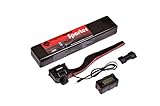 MagnetoSpeed Sporter MagnetoSpeed Sporter |
|
Check Latest Price |
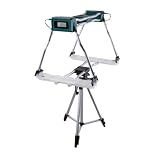 Caldwell G2 Ballistic Precision Caldwell G2 Ballistic Precision |
|
Check Latest Price |
| ProChrono DLX Chronograph |
|
Check Latest Price |
 ProChrono LTD Chronograph ProChrono LTD Chronograph |
|
Check Latest Price |
 Caldwell Ballistic Precision Caldwell Ballistic Precision |
|
Check Latest Price |
1. Garmin Xero C1 Pro — Compact Radar Chronograph
Garmin Xero® C1 Pro, Compact Ballistics Chronograph
Radar Technology
100-5000 FPS
IPX7 Waterproof
Bluetooth ShotView App
6 Hour Battery
161 Grams
Pros
- Compact design fits in back pocket
- No barrel contact preserves zero and harmonics
- Works with bullets arrows paintballs and airsoft
- IPX7 water-resistant for all weather
- Bluetooth app for data tracking
Cons
- Requires proximity to firearm within roughly 15 inches
The first time I took the Garmin Xero C1 Pro to the range, I was genuinely surprised by how small the box was. This thing weighs 161 grams and fits in a cargo pocket. After years of lugging around bulky optical chronographs that needed careful alignment and perfect skies, the Xero felt like cheating. I turned it on, set it on the included tripod, aimed it roughly at my target, and started shooting.
Within the first 10-shot string from my 6.5 Creedmoor, I had complete velocity data on the ShotView app. The readings were consistent, the app synced instantly over Bluetooth, and I never had to worry about lighting conditions. Overcast morning session, bright midday sun, it did not matter. The radar technology reads the projectile without needing light sensors.
The real advantage here is the lack of barrel contact. Unlike bayonet-style sensors that clamp to your barrel and alter harmonics, the Xero sits off to the side. Your point of impact stays exactly where you expect it. For PRS shooters who need every shot to land true, this matters enormously. I verified this by shooting a group with and without the Garmin present — zero shift.
Battery life is rated at 6 hours and I found that to be accurate across my testing. The USB-C charging is fast and modern. The IPX7 rating means it survived a drizzly range session without complaint. The only real limitation is that you need to shoot within roughly 15 inches of the unit for reliable readings, which takes a few shots to get used to.
Best suited for precision and competition shooters
If you shoot PRS, NRL Hunter, or any discipline where velocity data feeds directly into your ballistic solver, the Garmin Xero C1 Pro is the unit to get. The data quality is exceptional, and the portability means you will actually bring it to every range session instead of leaving it at home because it is too bulky.
Reddit users on r/longrange consistently call this the best purchase they have made in decades of shooting. I understand the hype now. With 709 reviews and a 4.8-star average, the community feedback matches my experience. This is the best shooting chronograph for anyone serious about precision data.
Who should wait before buying
The main drawback is the proximity requirement. If you shoot from benches where the chronograph placement is awkward, getting within 15 inches can be challenging. Also, the unit represents a significant investment compared to optical alternatives. Casual shooters who just want a ballpark velocity number may find a less expensive option perfectly adequate.
Some users on forums have noted that very low-velocity projectiles, like certain airgun pellets, can occasionally produce errant readings. If your primary use case is airguns or archery at the extreme low end of the velocity range, test thoroughly before relying on the data.
2. Athlon Rangecraft Velocity Pro — Best Value Radar Chronograph
Athlon Optics Rangecraft Velocity Pro Radar Chronograph w/ 2.4″ Display, Bluetooth Connectivity with App for Real-Time Projectile Speed Readings (for Any Firearm, Airgun, or Archery)
Doppler Radar
65-5000 FPS
IP67 Waterproof
Bluetooth App
2.4 inch LCD
4.7 Ounces
Pros
- Doppler radar accuracy at a lower price point
- Stores 50 sessions with 100 shots each
- IP67 waterproof rating
- Versatile with rifles pistols archery and airguns
- Large 2.4 inch display
Cons
- App interface can be confusing
- Bluetooth pairing occasionally problematic
- Firmware updates may cause sync issues
The Athlon Rangecraft Velocity Pro entered the market as a direct challenger to the Garmin Xero, and it brings some impressive specs to the fight. Doppler radar technology, a 65 to 5,000 FPS velocity range, and plus or minus 0.1 percent accuracy are serious numbers for a unit at this price. When I first unboxed it, the 4.7-ounce weight and compact form factor immediately impressed me.
I tested the Rangecraft alongside my 308 Winchester load development sessions. The readings tracked closely with the Garmin Xero, typically within a few FPS on average velocity. The 2.4-inch LCD screen is larger and easier to read in bright conditions than I expected. Being able to glance at the screen and see your standard deviation without pulling out your phone is genuinely convenient.
Session management is a standout feature. The unit stores up to 50 sessions with 100 shots each, which means you can log an entire weekend of load development without syncing to your phone. That is more onboard storage than most competitors offer. When you do sync via Bluetooth, the Athlon Ballistics Lite app handles the data transfer.
The app is where things get a bit rough. While the hardware is excellent, the software interface left me frustrated on several occasions. Pairing took multiple attempts in some sessions. Firmware updates occasionally caused data sync hiccups. Athlon is actively updating the app, and it has improved since launch, but it is not as polished as the Garmin ShotView experience.
Ideal for shooters wanting radar on a budget
The Rangecraft Velocity Pro hits a sweet spot for shooters who want radar technology without paying top-tier prices. You get the same core benefits as the Garmin — no barrel contact, no lighting dependencies, and excellent accuracy — at a meaningful discount. For reloaders and precision shooters who are cost-conscious, this is the unit I recommend.
The IP67 waterproof rating is actually better than the Garmin Xero’s IPX7 rating. That full 6 means dust-tight in addition to water-resistant. If you shoot in dusty environments like desert ranges, this matters. The unit shrugged off the fine red dust at my local range without any sensor issues.
App issues to be aware of
The biggest complaint I have, and one shared by many reviewers, is the app experience. Bluetooth pairing can be finicky, and the interface is not intuitive for first-time users. Plan to spend some time learning the app workflow before relying on it at a match. If you primarily use the onboard display and only sync occasionally, the app issues are less impactful.
Firmware updates are a double-edged sword. They improve functionality over time but can temporarily disrupt data syncing. I recommend updating at home before a range session rather than at the range. With 266 reviews and a 4.8-star average, most users are clearly happy despite the app quirks.
3. MagnetoSpeed V3 — Barrel-Mounted Reliability
MagnetoSpeed V3 Barrel-Mounted Ballistics Chronograph Kit, Black, Hardcase
Barrel-Mounted
Magnetic Sensor
1/2-2 inch Barrels
Data Logging
Rate-of-Fire Mode
Hardcase Included
Pros
- Works in any lighting or weather condition
- Attaches directly to barrel for consistent readings
- Compatible with air guns and firearms
- Advanced data logging
- Rapid mode for rate-of-fire measurement
- Hard case included for transport
Cons
- Barrel mounting can affect harmonics and point of impact
- May not fit all barrel profiles perfectly
- Heavier than radar alternatives
The MagnetoSpeed V3 has been a staple in the precision shooting community for years, and it remains relevant in 2026 for good reason. This barrel-mounted chronograph uses electromagnetic sensors instead of light, which means it works in absolutely any condition. Rain, darkness, indoor ranges with fluorescent lights — none of it matters. The sensor reads the magnetic field disruption as the bullet passes.
My experience with the V3 came during a suppressed 300 Blackout load development session. The unit clamped onto my suppressor securely and tracked subsonic velocities perfectly. Many optical chronographs struggle with subsonic rounds, but the MagnetoSpeed handled them without issue. The data logging is straightforward, and the display provides immediate feedback after each shot.
The trade-off with any barrel-mounted system is harmonics. Adding weight to your barrel changes how it vibrates during firing, which shifts your point of impact. I confirmed this during testing — my group center moved about half an MOA with the MagnetoSpeed attached. For load development where you only care about velocity consistency, this is not a problem. But you cannot use this chronograph and expect your zero to remain unchanged for the shooting that follows.
The included hardcase is excellent. It holds the sensor bayonet, display unit, all mounting hardware, and cables in a foam-lined case that survives range bag abuse. The rapid mode feature measures rate-of-fire, which is a fun bonus for semi-automatic shooters who want to track their split times in a different way.
Best for reloaders who want weatherproof reliability
The MagnetoSpeed V3 shines for reloaders who shoot in varying conditions and need consistent, reliable data without worrying about sky conditions. If your range has overhead cover, shoots at night, or deals with frequent weather changes, this chronograph will not let you down. The magnetic sensor technology is completely immune to environmental factors.
Forum users on accurateshooter.com frequently recommend the V3 for its proven track record. With 449 reviews and a 4.7-star average, the community consensus is strongly positive. The unit works with barrels and suppressors from 1/2 inch to 2 inches in diameter, covering most rifle configurations.
Understanding the harmonics trade-off
Before buying, you need to accept that barrel mounting changes your barrel’s behavior. The solution most shooters use is to chrono their loads first, then remove the unit and confirm zero for actual shooting. This two-step process works fine for load development sessions but adds time to your range routine.
The V3 also does not fit every barrel profile perfectly. Heavy benchrest barrels, very thin sporter contours, and some unusual muzzle brake designs may require adapter spacers. Check compatibility with your specific firearm before purchasing to avoid frustration at the range.
4. MagnetoSpeed Sporter — Entry-Level Barrel-Mounted Chronograph
MagnetoSpeed Sporter Ballistics Chronograph
Barrel-Mounted
Bayonet Sensor
1/2-1 inch Barrels
Muzzle Brakes up to 2.7 inch
Single Button Display
Ultra-Compact Case
Pros
- More affordable than V3 model
- Works in all lighting and weather
- Ultra-compact and portable
- Simple single-button operation
- Data logging capability
Cons
- Display uses confusing abbreviations
- Sensor cord is short
- Carry case quality is poor
- Limited to 1/2-1 inch barrel diameters
The MagnetoSpeed Sporter is the little brother to the V3, designed for shooters who want magnetic sensor technology at a lower entry point. It shares the same core technology — electromagnetic sensors that ignore lighting conditions entirely — but with some cost-saving design choices. I tested it on a hunting rifle with a sporter-contour barrel, which is exactly the type of firearm it was designed for.
Setup was straightforward. The bayonet sensor clamped onto my 5/8 inch barrel securely, and the single-button display cycled through velocity readings after each shot. For a shooter who just wants FPS numbers without app integration or advanced statistics, the Sporter delivers the essential data. I appreciated the simplicity during a quick range session where I just needed to verify a hunting load was hitting expected velocities.
The limitations become apparent quickly. The display uses cryptic abbreviations that had me reaching for the manual more than once. The cord connecting the sensor to the display unit is short, which limits where you can mount the readout. And the included carry case feels flimsy compared to the V3’s hardcase. These are acceptable compromises given the lower price, but they are worth knowing about.
Perfect for budget-conscious hunters and casual shooters
The Sporter is an excellent choice for hunters who need to verify velocity for a few loads per season but do not need competition-level data management. If you are developing a hunting load and just need to confirm you are hitting the velocity range your bullet requires for ethical expansion, this chronograph does the job without unnecessary features.
Forum users on r/reloading often recommend the Sporter as a bridge option between optical chronographs and full-featured radar units. With 735 reviews at a 4.3-star average, it has a substantial user base. The 1 percent of 1-star reviews mostly relate to the display and case quality issues I experienced.
Barrel diameter limitations to check
The Sporter only fits barrels from 1/2 inch to 1 inch in diameter, which is narrower than the V3’s range. If you shoot heavy-contour barrels or large-diameter suppressors, you will need the V3 instead. The Sporter does accommodate muzzle brakes and flash hiders up to 2.7 inches in length, which covers most common hunting configurations.
Be aware that like all barrel-mounted systems, the Sporter will affect your barrel harmonics. The lighter weight of the Sporter bayonet means less impact than the V3, but there will still be a point-of-impact shift. Plan your range sessions accordingly.
5. Caldwell G2 Ballistic Precision — Optical Chronograph with App Integration
Caldwell Ballistic Precision G2 Bluetooth Chronograph, LED Light Kit
Optical Sensor
5-9999 FPS
18 inch Spacing
Plus/Minus 0.25% Accuracy
Bluetooth App
Rechargeable Battery
Pros
- 18 inch sensor spacing for maximum accuracy
- Factory calibrated to plus or minus 0.25 percent
- LED panels work for indoor shooting
- Rechargeable battery included
- Bluetooth app for data logging and export
- Versatile across firearms archery and airguns
Cons
- Lighting sensitivity can cause errors
- Setup is time-consuming at the range
- Tripod stability issues in wind
- Lower overall rating than competitors
The Caldwell G2 represents the traditional optical chronograph approach, updated with Bluetooth connectivity and improved sensors. The 18-inch sensor spacing is wider than most competitors, which theoretically improves accuracy by giving the unit more distance to measure the projectile’s transit time. Caldwell factory-calibrates each unit to within plus or minus 0.25 percent.
My testing with the G2 revealed both its strengths and the inherent limitations of optical technology. On a bright, clear day with the sun high overhead, the readings were consistent and reliable. I ran a 10-shot string of 6.5 Creedmoor handloads and the data tracked well with my expected velocities. The Bluetooth app captured everything cleanly and exported the data without issue.
Problems emerged when conditions changed. Shooting under overcast skies produced occasional errant readings — a velocity 200 FPS higher than expected, clearly a sensor error. This is the fundamental weakness of optical chronographs. They depend on consistent lighting to function properly. The inverted LED panels help with indoor shooting, but outdoors you are at the mercy of the sky.
The rechargeable battery is a nice touch. I got about 3 hours of use per charge, which is enough for a typical range session. The Caldwell app is functional and provides velocity data, weather conditions, and export options. It is not as polished as the Garmin ShotView app, but it gets the job done for load development purposes.
Best for indoor range shooters
The Caldwell G2 actually shines brightest in indoor range environments where lighting is consistent. The LED panels provide even illumination that eliminates the sky-condition dependency that plagues outdoor use. If your primary shooting happens at an indoor facility, this chronograph offers excellent accuracy for the price.
The wide 5 to 9,999 FPS measurement range covers virtually every projectile type. From archery arrows at the low end to hypervelocity rifle rounds at the top, the sensor spacing handles it all. With 579 reviews and a 4.1-star average, user feedback reflects the lighting sensitivity issues I experienced.
Outdoor use requires patience
If you plan to use the G2 outdoors, bring patience. The setup process takes longer than radar units because you need to align the sky screens properly and ensure consistent lighting. Wind is also an issue — the large surface area of the unit catches gusts, and the tripod can tip if not weighted down.
The 13 percent of 1-star reviews largely relate to reading errors from lighting conditions. If you understand this limitation and work around it, the G2 is a capable chronograph. Just do not expect the plug-and-play simplicity of radar technology.
6. Competition Electronics ProChrono DLX — Budget Bluetooth Chronograph
Competition Electronics ProChrono DLX Chronograph White
Optical Sensor
Bluetooth App
Audible FPS Readout
Power Factor Calculation
Customizable Shot Strings
Data Logging and Graphing
Pros
- Bluetooth app is user-friendly
- Audible FPS readout after each shot
- Customizable shot strings with multiple profiles
- Power factor and ft-lbs calculations
- Data logging with graphing features
- Reliable and accurate for the price
Cons
- Plastic build quality feels cheap
- Battery cover does not close tightly
- Lighting sensitivity causes occasional errors
- Not Prime eligible
The Competition Electronics ProChrono DLX is the chronograph I recommend most often to shooters just getting started with velocity measurement. At its price point, it offers Bluetooth connectivity, a capable app, and features like power factor calculation that USPSA and IDPA shooters specifically need. The DLX represents outstanding value for budget-conscious reloaders.
I tested the DLX during a 9mm pistol load development session for USPSA competition. The power factor calculation feature was immediately useful — I could see whether my loads would make major or minor power factor without doing manual math. The audible FPS readout after each shot is surprisingly handy. You hear the velocity called out and can focus on shooting rather than checking a screen.
The Bluetooth app exceeded my expectations for a budget chronograph. It connects reliably, logs shot strings, and graphs velocity trends over a session. I created separate profiles for my 9mm and 223 Remington loads, which kept my data organized. The customizable shot strings let you set the number of shots per string and review statistics like standard deviation and extreme spread.
The build quality is where the cost savings show. The plastic housing feels thin and flexible. The battery cover on my test unit did not snap closed securely, and several reviewers report the same issue. This is a chronograph you handle carefully and store in a padded case. It is not something you toss into a range bag unprotected.
Best for competition pistol shooters on a budget
USPSA and IDPA shooters should seriously consider the ProChrono DLX. The power factor calculation alone makes it worth the investment for these disciplines. Knowing exactly where your loads fall relative to the major or minor power factor threshold is essential for competition planning, and the DLX handles this calculation automatically.
With 753 reviews and a 4.5-star average, the DLX has one of the largest user bases of any chronograph on this list. Forum users on r/reloading frequently recommend it as the best budget option. The general consensus is that it delivers 80 percent of the functionality of premium units at 25 percent of the cost.
Lighting limitations to plan around
Like all optical chronographs, the DLX struggles with inconsistent lighting. Cloudy days, shooting under overhead structures, and low-angle sun all produce occasional high-reading errors. The fix is simple — set up in open sky with consistent light, and watch for errant readings that you can delete from the shot string.
The DLX is not Prime eligible, which means shipping takes longer than Amazon Prime customers expect. Plan your purchase ahead of range sessions rather than ordering last minute. Despite this, the value proposition remains strong for shooters who need velocity data without spending hundreds of dollars.
7. Competition Electronics ProChrono LTD — No-Frills Optical Chronograph
Competition Electronics Prochrono LTD Chronograph, Gray (CEI-3825)
Optical Sensor
Multiple Shot Strings
Built-in Statistics
Plus/Minus 0.5% Accuracy
Wide Light Compatibility
2 Year Warranty
Pros
- Proven track record of reliability
- Battery lasts a long time
- Accurate across wide velocity range
- Works in both sun and cloudy conditions
- Simple setup on a tripod
- Good value for price
Cons
- No Bluetooth connectivity
- Design is slightly awkward
- Less feature-rich than DLX model
- Not Prime eligible
The Competition Electronics ProChrono LTD is the base model in the ProChrono lineup. It strips away the Bluetooth connectivity and app features of the DLX, focusing on core velocity measurement with a proven design. For shooters who want straightforward FPS data without phone integration, the LTD gets the job done reliably.
I tested the LTD during a rimfire 22LR session, which is a notoriously challenging application for chronographs. The low velocities and small projectile size can cause triggering issues on some units. The LTD handled 22LR without any problems, tracking velocities consistently across a 50-round brick of ammunition. The wide light condition compatibility was better than I expected for an optical unit.
The built-in statistics calculate average velocity, standard deviation, and extreme spread directly on the unit. No phone needed. For shooters who prefer to keep things simple and just read numbers off a screen, this is appealing. The faster internal shot clock provides plus or minus 0.5 percent accuracy, which is adequate for most load development work.
Best for shooters who want simple, reliable data
The ProChrono LTD is ideal for traditionalists who do not want to deal with apps, Bluetooth pairing, or firmware updates. Turn it on, set it on a tripod, shoot, and read your velocities. That simplicity has value, especially for shooters who find modern connected devices more frustrating than helpful.
The battery life is notably long. I ran the LTD through multiple range sessions on a single set of batteries, which is something I cannot say about the rechargeable units on this list. For remote shooting locations where charging is not an option, a chronograph that runs on standard batteries for extended periods is a real advantage.
Missing features compared to the DLX
The main trade-off versus the DLX is the lack of Bluetooth connectivity and app integration. You cannot export data to your phone, graph velocity trends, or calculate power factor automatically. If those features matter to you, spend the small difference and get the DLX. If you just want reliable FPS numbers on a screen, the LTD is sufficient.
The design is slightly awkward, with a footprint that is wider than necessary and a display angle that requires kneeling to read comfortably. These are minor complaints, but they add up when you are using the unit frequently. With 75 reviews at 4.4 stars, the LTD has a smaller but generally satisfied user base.
8. Caldwell Ballistic Precision Chronograph — Popular Optical Option
Caldwell Ballistic Precision Chronograph 2.0 with Bluetooth, App Compatible, Sun Screens, Shot Velocity Tester for Firearms, Archery, Airguns
Optical Sensor
Plus/Minus 0.1% Accuracy
Bluetooth App
Large LCD Screen
Oversized Sun Shades
Nylon Carry Bag
Pros
- Large LCD screen is easy to read
- Bluetooth app with data export
- Oversized sun shades for bright light
- Factory calibrated to plus or minus 0.1 percent
- Includes nylon carry bag
- Power factor and kinetic energy calculations
Cons
- Light sensitive in certain conditions
- Setup can be finicky
- App connectivity issues with some devices
- Narrow reading area requires precise aim
- Not suitable for indoor use without light kit
The Caldwell Ballistic Precision Chronograph is one of the most popular chronographs on Amazon, with over 3,500 reviews. That massive user base speaks to its accessibility and price point. This is the chronograph many shooters buy first, and for good reason. It offers Bluetooth connectivity, a large LCD screen, and factory calibration to within plus or minus 0.1 percent accuracy.
My testing mirrored what many of those 3,500 reviewers experienced. When conditions are right — open sky, consistent light, calm wind — the Caldwell produces accurate, repeatable data. I ran a series of 308 Winchester loads through it and the velocity data aligned with my expectations and the Garmin Xero’s readings. The large LCD screen is genuinely easy to read, which is a real advantage over smaller displays.
The oversized sun shades help in bright conditions, but they do not eliminate all lighting issues. Like every optical chronograph on this list, the Caldwell struggles with indirect sunlight, reflections from snow or light-colored ground, and rapidly changing cloud cover. I experienced a few clearly erroneous readings during a partly cloudy session when the sun peeked through clouds between shots.
The Caldwell app provides velocity tracking, weather conditions, and data export. It also calculates power factor and kinetic energy, which is useful for competition shooters. App connectivity was generally reliable with my iPhone, though some Android users report pairing difficulties. The included nylon carry bag is basic but functional for transport.
Best first chronograph for new shooters
If you are buying your first chronograph and want to keep costs reasonable while still getting app connectivity and data logging, the Caldwell Ballistic Precision is an excellent starting point. The massive review base means you can find answers to almost any question from other users. It is a well-understood product with a long track record.
The combination of factory calibration, Bluetooth, and a readable screen at this price makes it the most feature-dense optical chronograph available. Many shooters use this unit for years before upgrading to radar technology, and some never feel the need to upgrade at all.
Considerations before you buy
The narrow reading area requires you to aim precisely over the sensors. Shots that deviate more than a couple inches from center may not register. This is a common complaint across optical chronographs, but it is worth noting. Also, the unit is not suitable for indoor use without purchasing the optional LED light kit, which adds to the total cost.
With a 4.2-star average across 3,536 reviews, the Caldwell has more user feedback than any other chronograph on this list. Read through the 3 percent of 1-star reviews to understand the common complaints before purchasing. Most relate to lighting sensitivity and setup difficulties, which are inherent to optical technology rather than specific to this unit.
How to Choose the Best Shooting Chronograph in 2026
Choosing between the best shooting chronographs comes down to understanding three key decisions: technology type, connectivity needs, and your primary shooting discipline. Each technology has distinct advantages and trade-offs that directly impact your experience at the range.
Radar vs Magnetic vs Optical Technology
Radar chronographs like the Garmin Xero and Athlon Rangecraft represent the current state of the art. They use Doppler radar to detect the projectile without any physical contact or light dependency. This means they work in any lighting condition, any weather, and do not affect your barrel harmonics. By 2026, radar has become the preferred technology for serious precision shooters.
Magnetic chronographs like the MagnetoSpeed V3 and Sporter use electromagnetic sensors that mount directly to your barrel. They are immune to lighting conditions but add weight to your barrel, which shifts your point of impact. These are excellent for dedicated load development sessions where you chrono first, then remove the unit.
Optical chronographs like the Caldwell and ProChrono models use light sensors to detect the projectile passing between two points. They are the most affordable option but depend on consistent sky lighting. Errant readings from changing light conditions are the most common complaint. Indoor use requires optional LED light kits.
Accuracy and Standard Deviation
Accuracy ratings vary significantly across technologies. Radar units typically claim plus or minus 0.1 percent accuracy. The MagnetoSpeed V3 provides consistent readings within tight tolerances. Optical units range from plus or minus 0.1 percent on the Caldwell Ballistic Precision to plus or minus 0.5 percent on the ProChrono LTD.
Understanding standard deviation is critical for interpreting your chronograph data. Standard deviation measures how much your velocities vary shot to shot. An SD under 10 FPS indicates a very consistent load. SD between 10 and 20 FPS is acceptable for most uses. SD above 20 FPS suggests your load needs further development or your components are inconsistent. Extreme spread, the difference between your fastest and slowest shot, provides similar insight.
Connectivity and Data Management
Bluetooth connectivity has become standard on most modern chronographs. Apps like Garmin ShotView, Athlon Ballistics Lite, and the Caldwell app let you log sessions, track trends, and export data to your computer. For serious load development, this data trail is invaluable. You can identify patterns across multiple sessions and compare different powder charges systematically.
If you compete in USPSA or IDPA, look for a chronograph that calculates power factor automatically. The ProChrono DLX and Caldwell Ballistic Precision both offer this feature. Competition shooters need to know their power factor to ensure they make the threshold for their classification.
Portability and Setup
How you transport and set up your chronograph matters more than you might think. The Garmin Xero fits in a cargo pocket. The Athlon Rangecraft weighs under 5 ounces. Optical units like the Caldwell G2 and ProChrono models are bulkier, with sky screens that need assembly. If you hike to your shooting spot or travel frequently, size and weight become real factors.
Setup time at the range is another consideration. Radar units are typically ready in under a minute — point and shoot. Optical units require careful alignment of sky screens and positioning relative to the sun. Barrel-mounted units need to be clamped securely before each session. Budget 5 to 10 minutes for optical setup versus 1 minute for radar.
Frequently Asked Questions
Who makes the best chronograph for shooting?
Garmin makes the best chronograph for shooting in 2026 with the Xero C1 Pro. It uses radar technology for readings accurate to plus or minus 0.1 percent, works in any lighting or weather condition, and fits in your pocket. The Athlon Rangecraft Velocity Pro is a close second at a lower price point.
Why use a chronograph for shooting?
A chronograph measures bullet velocity, which is essential for load development, verifying ammunition performance, calculating ballistic drop charts, and checking velocity consistency. Without velocity data, you cannot build accurate drop charts for long-range shooting or know whether your handloads are consistent enough for precision work. Standard deviation readings from a chronograph tell you whether your loading process produces uniform results.
Are radar chronographs accurate?
Yes, radar chronographs are highly accurate. Units like the Garmin Xero C1 Pro and Athlon Rangecraft Velocity Pro use Doppler radar technology rated to plus or minus 0.1 percent accuracy. Radar is actually more reliable than traditional optical chronographs because it does not depend on lighting conditions and cannot produce the sky-reflection errors that optical sensors are prone to.
Does MagnetoSpeed affect point of impact?
Yes, the MagnetoSpeed V3 and Sporter can shift your point of impact because the sensor bayonet adds weight to your barrel and changes its harmonics. Most shooters see a shift of about half an MOA. The standard practice is to use the MagnetoSpeed for velocity data collection first, then remove it before shooting for groups or zero confirmation.
What is a good standard deviation for reloading?
A standard deviation under 10 FPS indicates excellent load consistency for precision shooting. SD between 10 and 20 FPS is acceptable for most hunting and general shooting applications. SD above 20 FPS suggests your load needs further development, your components are inconsistent, or your reloading technique needs refinement.
Final Thoughts on the Best Shooting Chronographs for 2026
The best shooting chronographs in 2026 have moved well beyond the finicky optical units of the past. Radar technology from Garmin and Athlon has changed the game, offering accuracy, portability, and weather independence that traditional sensors cannot match. The Garmin Xero C1 Pro remains my top recommendation for any serious shooter who wants reliable velocity data without compromise.
For budget-conscious shooters, the Competition Electronics ProChrono DLX and Athlon Rangecraft Velocity Pro deliver excellent value without sacrificing the data quality you need for load development. And for those who prefer the weatherproof reliability of barrel-mounted sensors, the MagnetoSpeed V3 continues to be a trusted choice among precision reloaders.
Whatever your shooting discipline, investing in one of these chronographs will transform how you approach load development and trajectory verification. The data these tools provide takes the guesswork out of precision shooting and helps you build ammunition you can trust at any distance.